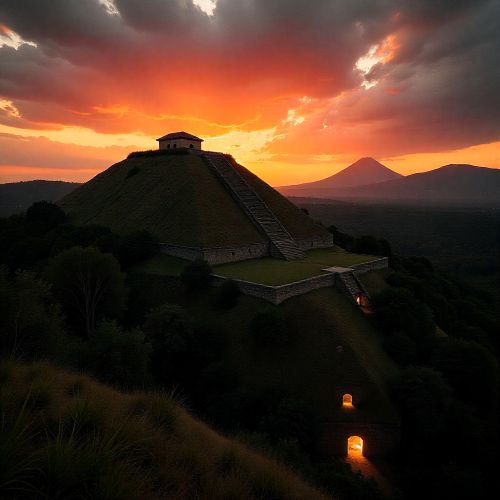
Sigiriya : The Rock Fortress
At a glance
| Description | |
|---|---|
| Mythology | South Asian Mythology |
| Country | Sri Lanka |
| Closest airport | Sigiriya Airport (GIU) |
| Type | Constructed |
| Accessibility | 08/10 |
Introduction
Sigiriya, often referred to as the “Eighth Wonder of the World,” is an awe-inspiring rock fortress located in the heart of Sri Lanka’s Central Province. Towering nearly 200 meters above lush forested plains, this colossal rock outcrop showcases a stunning fusion of natural beauty and human ingenuity. A UNESCO World Heritage Site, Sigiriya is more than a historic monument—it is a narrative carved in stone, blending royal ambition, artistic brilliance, and cultural legacy. Built in the 5th century CE by King Kashyapa, the fortress complex includes remnants of a royal palace, gardens, advanced water systems, and elaborate frescoes that make it one of the most visited and studied archaeological sites in South Asia.
Connection with Mythology
Sigiriya’s story unfolds not only through archaeological records but also in the layers of myth and legend tied to it. The site is popularly believed to have been associated with Ravana, the fabled king from the Ramayana, and some traditions claim it was once a celestial citadel. However, the historical foundation is more closely linked to King Kashyapa, who seized the throne from his father, King Dhatusena, and built Sigiriya as a fortified palace and a statement of power. The name itself—“Sinha Giri,” meaning Lion Rock—emerges from the massive lion-shaped entrance once guarding the summit. After Kashyapa’s fall in battle, the fortress was repurposed into a Buddhist monastic retreat, which remained active for centuries, underscoring its continued spiritual and cultural relevance.
Ways to Get There
Reaching Sigiriya is convenient thanks to its central location and growing popularity among tourists. Situated roughly 180 kilometers northeast of Colombo, it offers various travel choices. The nearest town, Dambulla, acts as a hub for onward journeys. From Colombo, travelers can drive or hire a taxi, completing the trip in about 3.5 to 4 hours, depending on traffic conditions. While there are no direct train services to Sigiriya, the closest railway station is in Habarana. From there, a short tuk-tuk or taxi ride completes the journey. Long-distance buses also operate between major cities like Colombo and Dambulla, followed by local transport options to reach the site. For those seeking speed and comfort, domestic flights operated by Cinnamon Air connect Colombo to Sigiriya in just 30 minutes. On arrival, exploring the area by bicycle or scooter is a rewarding way to appreciate the surrounding villages and landscapes.
What to Look For
A visit to Sigiriya is a deep dive into a historical and aesthetic experience unlike any other. The journey begins at the base of the rock, where meticulously laid-out water gardens and moats reflect the sophisticated hydraulic engineering of ancient Sri Lanka. These landscaped gardens lead to the massive stone steps climbing the rock’s steep face. Midway, visitors encounter the world-famous frescoes—depictions of celestial maidens with graceful features and vivid colors that have survived for over 1,500 years. Adjacent is the Mirror Wall, originally polished so smooth that the king could see his reflection. Today, it’s adorned with ancient inscriptions, revealing the thoughts of visitors who came centuries before.
Continuing upward, climbers reach the lion platform, where colossal lion paws frame the final staircase leading to the summit. The upper plateau contains the ruins of King Kashyapa’s palace, complete with cisterns carved into the rock and panoramic views stretching across the surrounding countryside. Nearby attractions such as Pidurangala Rock, which offers a less crowded climb and incredible sunrise views, and the Dambulla Cave Temples, enhance the historical depth of the area. The Sigiriya Museum at the base of the site provides valuable insights into the archaeological significance and conservation efforts surrounding this ancient marvel.
Importance in cultural history
Sigiriya is not merely an archaeological treasure; it is a profound cultural symbol in Sri Lanka’s national identity. It represents an era where politics, religion, and art coexisted to create monumental expressions of power and devotion. King Kashyapa’s transformation of a monolithic rock into a royal city reflects not just his political aspirations but also his visionary approach to architecture and aesthetics. The frescoes remain a significant artistic legacy, showing influences that predate similar traditions in other parts of South and Southeast Asia.
As a royal capital, a monastic center, and now a globally recognized heritage site, Sigiriya captures the evolution of Sri Lanka’s civilization. Its sophisticated water systems, terraced gardens, and fortified structures exhibit a level of urban planning and environmental harmony that was well ahead of its time. It also provides a narrative of how history can be preserved in stone and nature, bridging the ancient and the contemporary for modern explorers and scholars.
Best time to travel
Planning the timing of a trip to Sigiriya can significantly enhance the experience. The best months to visit fall between January and April, when dry weather prevails and hiking conditions are ideal. This period provides clear skies, cooler mornings, and the perfect climate for ascending the rock and enjoying uninterrupted views from the summit. From May to September, the region remains generally dry, although the heat becomes more intense as the season progresses.
October and November mark the beginning of the monsoon season, often bringing heavy rainfall that can make climbing slippery and obscure the scenic vistas. To avoid crowds and midday heat, early morning visits are highly recommended. The gates open at 6:30 AM, and the site becomes accessible by 7 AM, offering a tranquil environment and stunning light for photography. Average temperatures in Sigiriya range between 21°C (69°F) and 34°C (93°F) throughout the year, with tropical humidity adding to the intensity during the warmer months.

 Mary Beard : Rethinking Rome and Classical Antiquity
 Dr Joshua Bowen : Ancient Near Eastern Scholar and Public Educator
 Dr Emily Zarka : Monsters, Folklore, and the Human Story
 Dr. Siraporn Nathalang : Thailand’s Foremost Folklore Scholar
 Jonathan Z. Smith : A Pioneering Thinker in the Study of Religion
Source
TripCrafters. (n.d.). How To Reach Sigiriya (2025). Retrieved July 2025, from https://www.tripcrafters.com/travel/how-to-reach-sigiriya
Tripoto. (2016, November 3). How to visit Sigiriya Lion Rock using local transport (by Bus). Retrieved July 2025, from https://www.tripoto.com/sri-lanka/trips/how-to-visit-sigiriya-lion-rock-using-local-transport-by-bus-601b95b72021d
Journey Era. (2024, May 18). How to get from Colombo to Sigiriya: Complete Guide. Retrieved July 2025, from https://www.journeyera.com/colombo-to-sigiriya/
Vocal Media. (n.d.). Sigiriya(සිගිරිය) | History. Retrieved July 2025, from https://vocal.media/history/sigiriya-7h21a0761
Sri Lanka Authentic Holidays. (n.d.). Sigiriya: Sri Lanka’s Iconic Rock Fortress & Ancient Marvel. Retrieved July 2025, from https://www.srilankaauthenticholidays.com/travel-blog/sigiriya-uncovered-delving-into-the-history-art-and-legends-of-an-iconic-wonder/
Wikipedia. (n.d.). Sigiriya. Retrieved July 2025, from https://en.wikipedia.org/wiki/Sigiriya
Ancient Origins. (2023, April 2). The Ancient Rock City of Sigiriya: Fit for a King and Built by the Gods. Retrieved July 2025, from https://www.ancient-origins.net/ancient-places-asia/ancient-rock-city-sigiriya-001075
Tripoto. (n.d.). The Story of Sigiriya. Retrieved July 2025, from https://www.tripoto.com/sri-lanka/trips/the-story-of-sigiriya-5b6a9807400f6
National Geographic. (2019, September 3). Sigiriya, the ‘Lion Fortress’ of Sri Lanka. Retrieved July 2025, from https://www.nationalgeographic.com/history/history-magazine/article/sri-lanka-sigiriya-fortress
Frequently Asked Questions
Lorem ipsum dolor sit amet, consectetur adipiscing?
Lorem ipsum dolor sit amet, consectetur adipiscing elit. Praesent convallis vestibulum justo, ac tincidunt nunc vehicula quis. Nullam id dolor quis orci malesuada feugiat. Curabitur aliquet libero at urna ullamcorper, ac ultricies nulla dapibus.
Lorem ipsum dolor sit amet, consectetur adipiscing?
Lorem ipsum dolor sit amet, consectetur adipiscing elit. Praesent convallis vestibulum justo, ac tincidunt nunc vehicula quis. Nullam id dolor quis orci malesuada feugiat. Curabitur aliquet libero at urna ullamcorper, ac ultricies nulla dapibus.
Lorem ipsum dolor sit amet, consectetur adipiscing?
Lorem ipsum dolor sit amet, consectetur adipiscing elit. Praesent convallis vestibulum justo, ac tincidunt nunc vehicula quis. Nullam id dolor quis orci malesuada feugiat. Curabitur aliquet libero at urna ullamcorper, ac ultricies nulla dapibus.
Lorem ipsum dolor sit amet, consectetur adipiscing?
Lorem ipsum dolor sit amet, consectetur adipiscing elit. Praesent convallis vestibulum justo, ac tincidunt nunc vehicula quis. Nullam id dolor quis orci malesuada feugiat. Curabitur aliquet libero at urna ullamcorper, ac ultricies nulla dapibus.
Lorem ipsum dolor sit amet, consectetur adipiscing?
Lorem ipsum dolor sit amet, consectetur adipiscing elit. Praesent convallis vestibulum justo, ac tincidunt nunc vehicula quis. Nullam id dolor quis orci malesuada feugiat. Curabitur aliquet libero at urna ullamcorper, ac ultricies nulla dapibus.