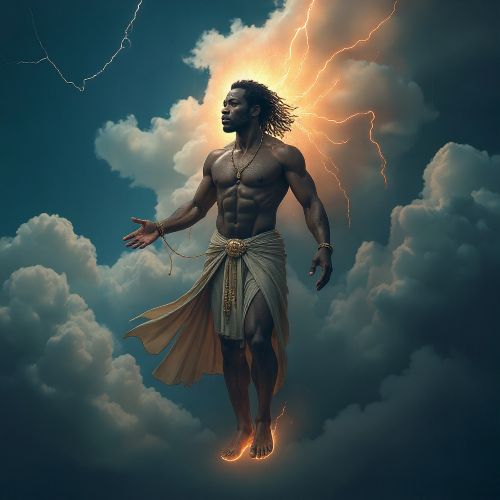
Huycau : Chief of the Gods
Listen
At a glance
| Description | |
|---|---|
| Origin | Ossetian Mythology |
| Classification | Gods |
| Family Members | N/A |
| Region | Russia |
| Associated With | Supreme Powers, Sky |
Huycau
Introduction
Huycau (also spelled Xucau, Xwycaw, or in Ossetian: Хуыцау) is the supreme deity of Ossetian mythology and the divine ruler of the heavens. Originating from the ancient Sarmatian and Scythian spiritual traditions of the Caucasus, Huycau represents the ultimate embodiment of creation, order, and justice. Much like Zeus in Greek mythology or Odin in Norse myth, he stands as the head of the Ossetian pantheon, governing a hierarchy of celestial spirits known as zædtæ and dawdžytæ. However, unlike those anthropomorphic gods, Huycau’s presence is deeply philosophical—he symbolizes the invisible, all-pervading divine essence that sustains the cosmos. His mythology reflects a fusion of Indo-Iranian religious themes and indigenous Caucasian spirituality, forming a complex belief system that has evolved alongside Ossetian cultural identity.
Physical Traits
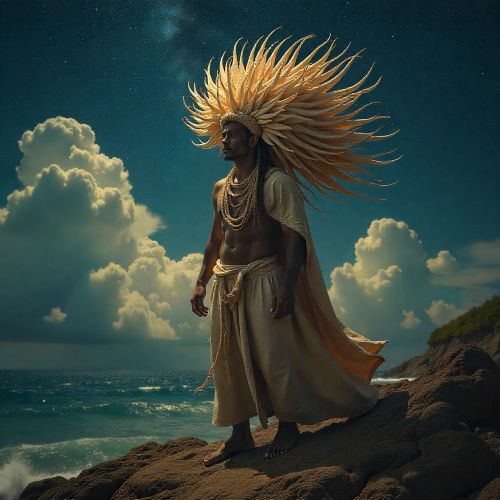
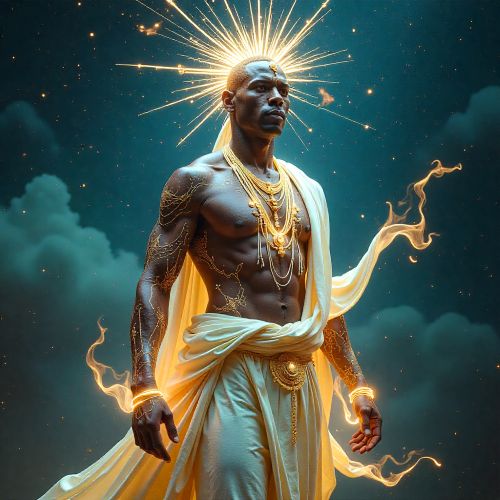
Huycau is rarely depicted in human form. Instead, he is imagined as a radiant, celestial force—an embodiment of pure light, wisdom, and divine authority. Ossetian oral traditions often describe him as dwelling in the uppermost sky, from where he oversees the order of the universe. His association with the sun, sky, and ether symbolizes his transcendence and purity, while his lack of physical form highlights his omnipresence. In some poetic interpretations, he is portrayed as an elder wrapped in golden light, surrounded by the stars that represent his divine creations. This abstraction aligns with the Indo-Iranian concept of supreme deities like Ahura Mazda, who are understood as metaphysical entities rather than corporeal beings. For the Ossetian people, Huycau’s invisibility is not a limitation but a sign of his eternal presence in all aspects of life and consciousness.
Family
The Ossetian pantheon places Huycau at its highest tier, where he serves as both creator and father to all other gods. His divine hierarchy includes deities such as Uastyrdzhi, the patron of men and travelers, Uacilla, the god of thunder and harvest, and Barastyr, the judge of the dead. These figures act as intermediaries between humans and the supreme god, executing Huycau’s will across different realms of existence. Though his familial relationships are not described in genealogical terms, Huycau’s authority over these divine figures symbolizes his role as the cosmic patriarch. In certain Ossetian epics, particularly the Nart sagas, Huycau is considered the spiritual ancestor of the Narts, a race of semi-divine heroes. Through them, he becomes not only a celestial ruler but also a moral guardian of humankind, ensuring that divine justice and ethical order are preserved throughout creation.
Other names
Huycau is known by various spellings and titles that reflect regional dialects and historical linguistic influences. He is referred to as Xucau, Xwytsau, Hytsau, and in Ossetian script, Хуыцау. Other honorifics, such as Styr Xwytsau (“Great God”) and Duneskænæg (“Creator of the Universe”), emphasize his omnipotence and role as the architect of all existence. Linguistic evidence suggests a connection between “Huycau” and the Persian word “Khuda,” meaning “God,” pointing to ancient Indo-Iranian roots. However, scholars also note that certain phonetic similarities exist with local Caucasian languages, indicating a fusion of Iranian and native religious traditions. In post-Christian Ossetian culture, Huycau’s identity occasionally merges with the Christian concept of God, reflecting a syncretic evolution where traditional beliefs adapt within new theological frameworks while maintaining their indigenous essence.
Powers and Abilities
Huycau’s powers extend beyond the act of creation—he governs the moral, cosmic, and natural orders of the universe. He sustains life, controls fate, and embodies the universal law that binds all beings. His omnipotence manifests in every aspect of the natural world, from the rhythm of the seasons to the justice of human actions. Rather than direct worship, Ossetians traditionally honor Huycau through intermediary deities like Uastyrdzhi, who carry the prayers of mortals to the supreme god. This indirect worship reflects deep reverence for his transcendence; Huycau is too vast and pure for humans to approach directly.
In mythic symbolism, Huycau governs the balance between heaven and earth, ensuring that the divine and mortal realms remain in harmony. His presence is felt through thunder, sunlight, and wind—each a manifestation of his will. Ossetian rituals emphasize purity and moral integrity as means to align oneself with Huycau’s divine essence. His power is not one of destruction but of balance and justice, representing the ethical center of Ossetian spirituality. Through his guidance, humanity learns the principles of truth, honor, and righteousness that define the moral fabric of the Ossetian worldview.
Modern Day Influence
Huycau’s worship continues to shape Ossetian identity, especially through the modern revival of the traditional faith known as Uatsdin (“True Faith”). This contemporary movement seeks to restore ancient Ossetian spirituality, emphasizing reverence for Huycau as the eternal Creator and moral compass of the world. While direct sacrifices to Huycau are rare, many rituals dedicated to other deities—particularly Uastyrdzhi—are performed in his honor. These ceremonies, often held in the highlands of North and South Ossetia, reaffirm the people’s connection to their ancestral traditions.
In modern Ossetian literature, poetry, and visual art, Huycau has become a potent symbol of divine justice, cultural continuity, and national identity. Artists and writers evoke his name to represent the enduring strength of the Ossetian spirit through centuries of political and cultural transformation. His legacy also extends into academic and comparative mythology, where scholars draw parallels between Huycau and other Indo-European sky gods, positioning him as a vital figure in understanding ancient Eurasian religious thought.
Interestingly, Huycau’s influence has even reached contemporary astronomy: a star has been named “Huycau” in his honor, symbolizing the Ossetian god’s enduring association with the heavens. This gesture highlights how mythology continues to inspire modern scientific and cultural expressions alike.
Following the collapse of the Soviet Union, Ossetia experienced a resurgence of cultural pride, and with it, a revival of ancient spiritual traditions. Huycau now represents not just a mythological deity but also a unifying symbol of Ossetian heritage—embodying both the cosmic order of old and the moral consciousness of a people determined to preserve their past while adapting to the present. His timeless presence in prayer, folklore, and scholarship underscores the living nature of myth, where the divine continues to guide human understanding of truth, justice, and the universe itself.
Related Images
 What Were Odin’s Riddles, and Why Were They Deadly?
 Akan Caribbean Mythology: African Beliefs That Crossed the Atlantic
 Why the Solar Solstice marked the most powerful days of the ancient world
 Solar Equinox in Ancient Belief: Light, Darkness and Divine Harmony
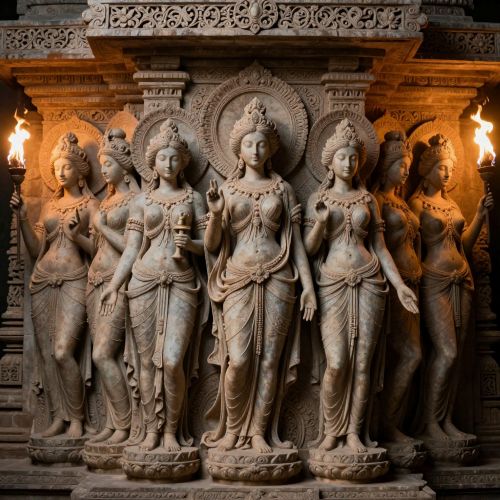 Saptamatrika : The Seven Mother Goddesses Who Shape Cosmic Power

Source
Darchiev, A. V. (2020). On the problem of meaning of three-legged horse in Ossetian mythology. Nauka Dialog.
DBpedia. (1999). Xucau – Supreme god of Ossetian mythology. Retrieved from https://dbpedia.org/page/Xucau
Beyond Heroes. (n.d.). Armenia and Ossetia: The pantheon of mountain gods. Retrieved from http://beyondheroes2.altervista.org/armeniaossetia.htm
Schmitz, T. (2015). Etseg Din – Caucasian Paganism from Ossetia. Independent Research Monograph.
Wikipedia. (2006). Xucau. Retrieved from https://en.wikipedia.org/wiki/Xucau
Namu Wiki. (2022). Ossetian Mythology. Retrieved from https://en.namu.wiki
Wikipedia. (2007). Ossetian Mythology. Retrieved from https://en.wikipedia.org/wiki/Ossetian_mythology
Vsuete Travel. (2017). Uastyrdzhi: Unique rock monument in North Ossetia. Retrieved from https://vsuete.com/uastyrdzhi-unique-rock-monument-in-north-ossetia/
Abaev, V. I. (1958). Historical-Etymological Dictionary of the Ossetian Language. Moscow: Academy of Sciences USSR.
Tuite, K. (2004). The Rise and Fall and Revival of the Ibero-Caucasian Hypothesis. Historiographia Linguistica, 31(1), 55–74.
Colarusso, J. (2002). Nart Sagas: Ancient Myths and Legends of the Circassians and Abkhazians. Princeton University Press.
Dumézil, G. (1978). Gods of the Ancient Northmen. University of California Press.
Foltz, R. (2010). Spirituality in the Caucasus: Indigenous Faiths and the Challenge of Modernity. Comparative Studies of South Asia, Africa and the Middle East, 30(1), 71–85.
Frequently Asked Questions
What is lorem Ipsum?
I am text block. Click edit button to change this text. Lorem ipsum dolor sit amet, consectetur adipiscing elit. Ut elit tellus, luctus nec ullamcorper mattis, pulvinar dapibus leo.
What is lorem Ipsum?
I am text block. Click edit button to change this text. Lorem ipsum dolor sit amet, consectetur adipiscing elit. Ut elit tellus, luctus nec ullamcorper mattis, pulvinar dapibus leo.
What is lorem Ipsum?
I am text block. Click edit button to change this text. Lorem ipsum dolor sit amet, consectetur adipiscing elit. Ut elit tellus, luctus nec ullamcorper mattis, pulvinar dapibus leo.
What is lorem Ipsum?
I am text block. Click edit button to change this text. Lorem ipsum dolor sit amet, consectetur adipiscing elit. Ut elit tellus, luctus nec ullamcorper mattis, pulvinar dapibus leo.
What is lorem Ipsum?
I am text block. Click edit button to change this text. Lorem ipsum dolor sit amet, consectetur adipiscing elit. Ut elit tellus, luctus nec ullamcorper mattis, pulvinar dapibus leo.