Bhargavastra : The Fiery Weapon
Bhargavastra
Introduction
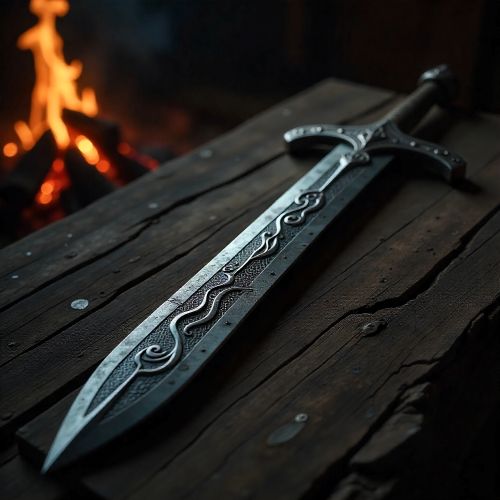
Among the pantheon of divine weapons in Indian mythology, the Bhargavastra stands out as a symbol of fiery destruction and divine justice. Associated primarily with Parashurama, the sixth avatar of Vishnu, this celestial weapon embodies the convergence of spiritual discipline and martial might. Unlike the more frequently discussed Brahmastra or Pashupatastra, the Bhargavastra remains an esoteric but immensely potent armament, revered for its devastating force and the moral weight behind its use. References to it in the Mahabharata and other ancient texts underscore its status as one of the deadliest astras ever conceived—a weapon that punishes arrogance and restores dharma. The Bhargavastra represents the idea that true power is guided by virtue and not by vanity or vengeance.
Origins
The Bhargavastra traces its origins to the Bhargava lineage—descendants of the sage Bhrigu. Parashurama, born as the son of Sage Jamadagni and Renuka, inherited not just his family’s spiritual heritage but also their connection to cosmic knowledge. After performing severe penance and demonstrating unwavering devotion, Parashurama received celestial weapons from both Shiva and Vishnu. It is believed that the Bhargavastra was either directly bestowed upon him by the gods or created by him through divine energy as an extension of his own ascetic power.
The word “astra” itself means “that which is launched,” denoting a weapon of both physical and spiritual potency. The Bhargavastra was a mantramukta astra, one that could only be activated through sacred incantations and immense concentration. Its divine nature reflected Parashurama’s dual role as warrior and sage—a protector who destroyed to purify, a destroyer who restored order. In some traditions, it is said that Parashurama infused part of his spiritual energy into the weapon, making it inseparable from his will.
Think you know your myths and legends? Dive into the world of ancient stories and test your knowledge with our engaging quizzes on Mythlok!
Powers
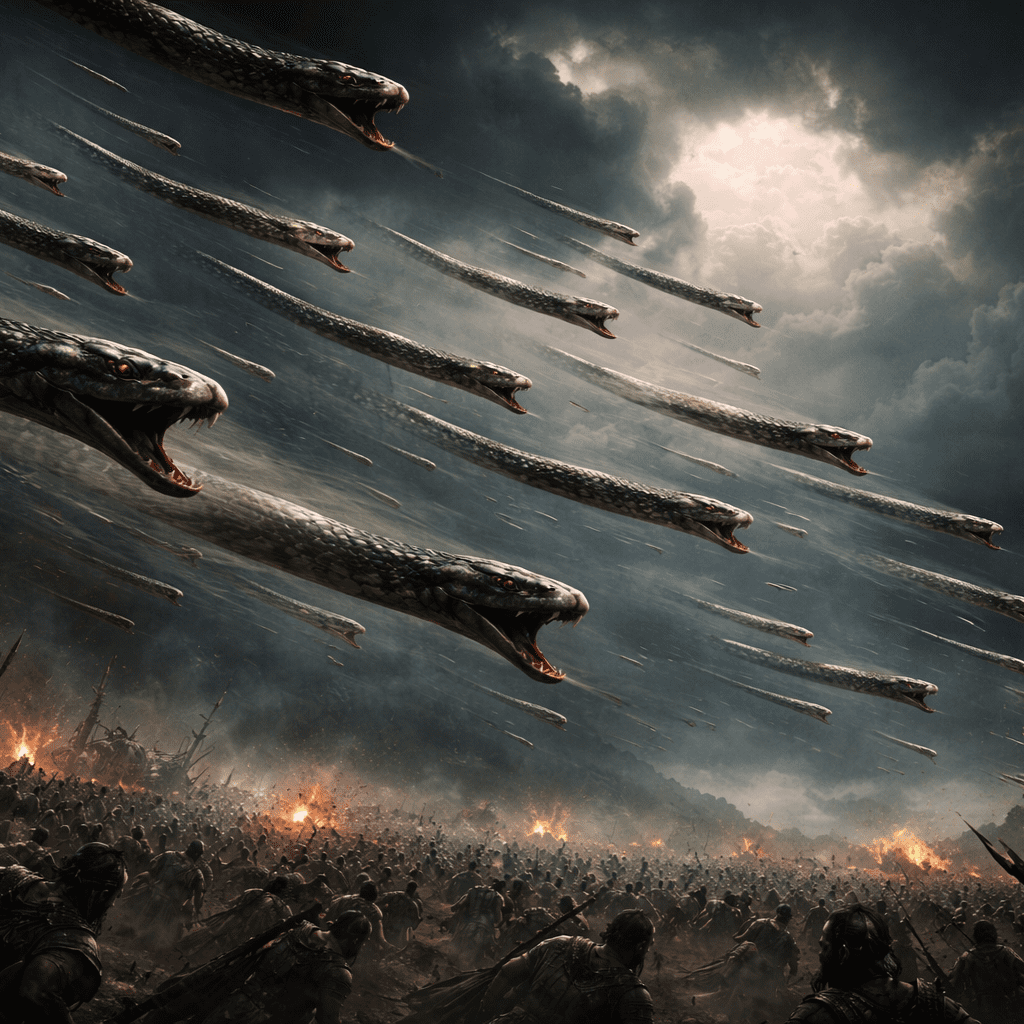
The Bhargavastra’s power was unparalleled among fire-based celestial weapons. Ancient texts describe it as capable of unleashing a storm of blazing missiles that consumed entire armies. When invoked, the weapon released innumerable fiery arrows that covered the sky, burning everything in their path until only ashes remained. Its fire was said to contain both the destructive energy of Agni and the divine fury of Shiva, embodying destruction as a necessary step toward renewal.
What set the Bhargavastra apart was its moral alignment—it would not harm the innocent. The weapon was said to respond to the wielder’s righteousness, sparing those who upheld dharma and annihilating those who strayed from it. This selective precision made it both a symbol of divine retribution and a spiritual test. Legends imply that even gods were cautious of its invocation, as it could alter the balance of cosmic order if used improperly.
In modern symbolic interpretations, the Bhargavastra is often compared to harnessing controlled energy, akin to the nuclear force—devastating if misused, yet purifying and protective when guided by wisdom.
Owners/Users
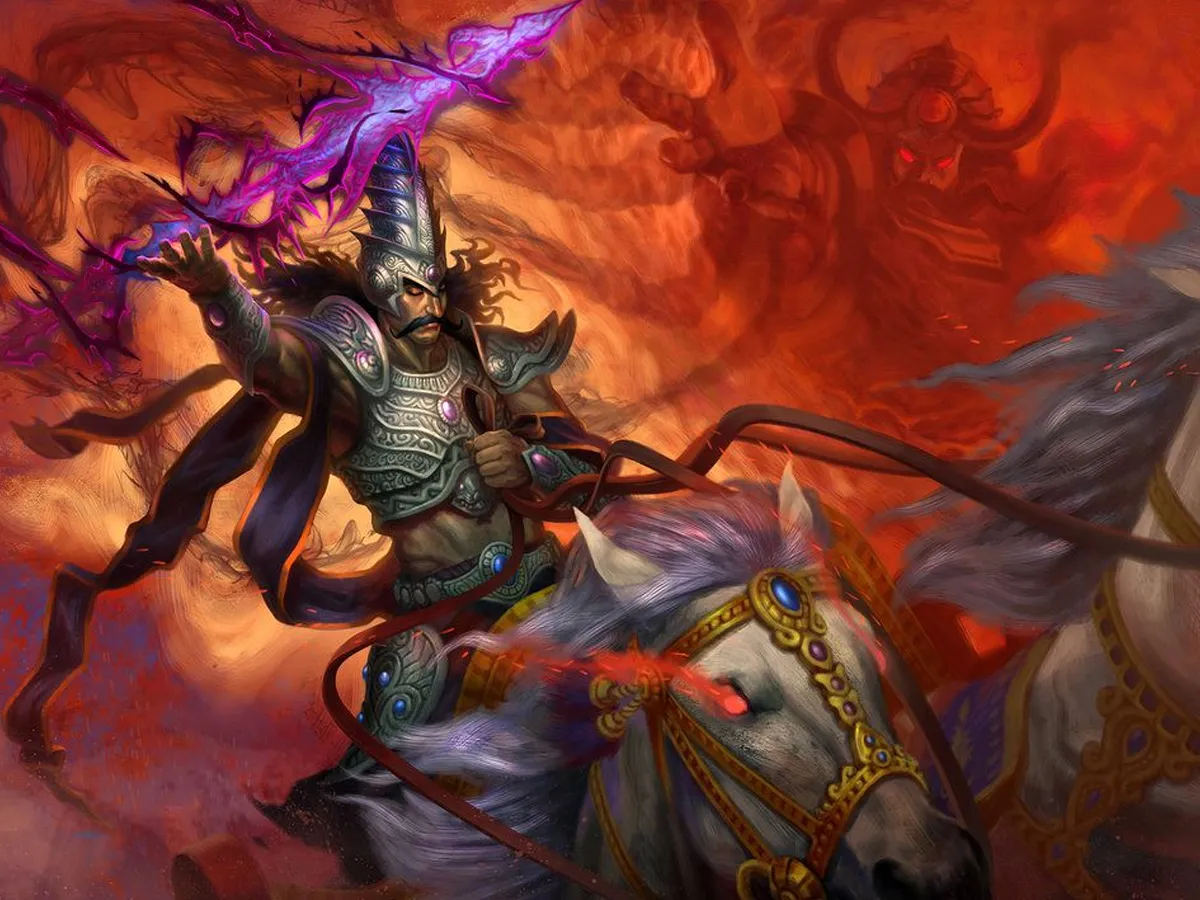
The Bhargavastra was most famously wielded by Parashurama, the immortal warrior-sage who vowed to rid the earth of corrupt Kshatriyas twenty-one times. He used it as an instrument of divine justice rather than personal revenge, channeling his wrath into an act of purification. Through the Bhargavastra, Parashurama enacted cosmic order, demonstrating that even destruction can serve a higher purpose when aligned with dharma.
The second notable wielder of the Bhargavastra was Karna, the legendary hero of the Mahabharata. During his training under Parashurama, Karna mastered the knowledge of divine astras, including this weapon. Although he invoked it only once during the Kurukshetra War, its power was said to be so overwhelming that even Arjuna was forced to retreat. The transmission of Bhargavastra to Karna symbolizes the sacred bond between teacher and disciple—where knowledge of destruction was entrusted only to those deemed worthy by virtue and strength of character.
Some interpretations suggest that the Bhargavastra remained exclusive to Parashurama’s disciples, never widely disseminated like other celestial weapons. This exclusivity underscores its sanctity and the immense responsibility tied to wielding such divine force.
[wpforms id=”23245″ title=”false”]
Instances used
The most celebrated use of the Bhargavastra occurred during Parashurama’s confrontation with King Kartavirya Arjuna, a powerful monarch blessed with a thousand arms. When Kartavirya, in his arrogance, killed Parashurama’s father, the enraged sage invoked the Bhargavastra. The weapon scorched the battlefield, reducing the king’s armies to ashes and severing Kartavirya’s arms in a single, divine strike. This event marked not only vengeance but the restoration of justice—demonstrating that divine power serves as an extension of cosmic law.
In the Mahabharata, Karna’s deployment of Bhargavastra against the Pandava army is another recorded instance. The weapon rained down an inferno upon the battlefield, forcing even Arjuna to defend himself with the Vayavastra and Varunastra. The ensuing clash between fire and wind was said to shake the heavens, symbolizing the cosmic tension between destruction and preservation. Though Karna’s use of the Bhargavastra showcased his might, it also reflected his tragic fate—armed with divine strength yet constrained by destiny.
Some regional retellings of the Ramayana also mention Parashurama possessing Bhargavastra when he confronted Lord Rama after Sita’s swayamvara, though he did not use it. This restraint underscores the weapon’s sacred nature—it was never to be wielded for pride or challenge but solely for the restoration of dharma.




 What Were Odin’s Riddles, and Why Were They Deadly?
 Akan Caribbean Mythology: African Beliefs That Crossed the Atlantic
 Why the Solar Solstice marked the most powerful days of the ancient world
 Solar Equinox in Ancient Belief: Light, Darkness and Divine Harmony
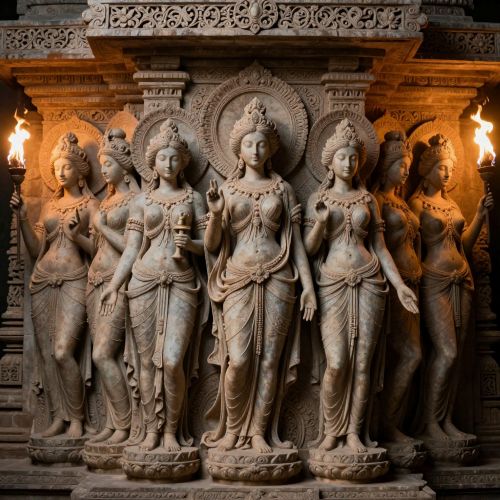 Saptamatrika : The Seven Mother Goddesses Who Shape Cosmic Power
Frequently Asked Questions
Lorem ipsum dolor sit amet, consectetur adipiscing?
Lorem ipsum dolor sit amet, consectetur adipiscing elit. Praesent convallis vestibulum justo, ac tincidunt nunc vehicula quis. Nullam id dolor quis orci malesuada feugiat. Curabitur aliquet libero at urna ullamcorper, ac ultricies nulla dapibus.
Lorem ipsum dolor sit amet, consectetur adipiscing?
Lorem ipsum dolor sit amet, consectetur adipiscing elit. Praesent convallis vestibulum justo, ac tincidunt nunc vehicula quis. Nullam id dolor quis orci malesuada feugiat. Curabitur aliquet libero at urna ullamcorper, ac ultricies nulla dapibus.
Lorem ipsum dolor sit amet, consectetur adipiscing?
Lorem ipsum dolor sit amet, consectetur adipiscing elit. Praesent convallis vestibulum justo, ac tincidunt nunc vehicula quis. Nullam id dolor quis orci malesuada feugiat. Curabitur aliquet libero at urna ullamcorper, ac ultricies nulla dapibus.
Lorem ipsum dolor sit amet, consectetur adipiscing?
Lorem ipsum dolor sit amet, consectetur adipiscing elit. Praesent convallis vestibulum justo, ac tincidunt nunc vehicula quis. Nullam id dolor quis orci malesuada feugiat. Curabitur aliquet libero at urna ullamcorper, ac ultricies nulla dapibus.
Lorem ipsum dolor sit amet, consectetur adipiscing?
Lorem ipsum dolor sit amet, consectetur adipiscing elit. Praesent convallis vestibulum justo, ac tincidunt nunc vehicula quis. Nullam id dolor quis orci malesuada feugiat. Curabitur aliquet libero at urna ullamcorper, ac ultricies nulla dapibus.
Watch
Source
Jagranjosh. (2025, May 13). What is Bhargavastra? India’s low cost and indigenous micro-missile air defence system. Retrieved from https://www.jagranjosh.com
PMF IAS. (2025, May 18). What is Bhargavastra? Retrieved from https://www.pmfias.com/bhargavastra
Wikipedia. (2007, August 4). Astra (weapon). Retrieved from https://en.wikipedia.org/wiki/Astra_(weapon)[7]
The Story Club. (2024, May 3). Bhargavastra | Astras of Ancient Bharat [Video]. YouTube. Retrieved from https://www.youtube.com/watch?v=ivaGgueTIA8
Amoghavarsha IAS KAS. (2025, January 17). What is Bhargavastra. Retrieved from https://amoghavarshaiaskas.in
Brockington, J. (1998). The Sanskrit epics. Brill Academic Publishers.
Kane, P. V. (1974). History of Dharmasastra (Ancient and Medieval Religious and Civil Law in India). Bhandarkar Oriental Research Institute.
Ganguli, K. M. (Trans.). (1883–1896). The Mahabharata of Krishna-Dwaipayana Vyasa. Calcutta: P.C. Roy.
Narayan, R. K. (1978). The Mahabharata: A Shortened Modern Prose Version. University of Chicago Press.