
Thánh Gióng: The Vietnamese Warrior Hero
Listen
At a glance
| Description | |
|---|---|
| Origin | Vietnamese Mythology |
| Classification | Demigods |
| Family Members | N/A |
| Region | Vietnam |
| Associated With | Strength, Warfare |
Thánh Gióng
Introduction
Thánh Gióng, one of the most celebrated figures in Vietnamese mythology, stands as a powerful symbol of courage, patriotism, and miraculous destiny. Also known as Saint Gióng, he is recognized as one of the Four Immortals in Vietnamese spiritual tradition and honored as a divine protector of the land. His story, deeply rooted in periods of struggle against foreign invasions, reflects the resilience and unity of the Vietnamese people. From a silent child to a colossal hero who ascended to the heavens after saving his nation, Thánh Gióng continues to inspire national pride, festivals, military symbolism, and cultural expression throughout Vietnam.
Physical Traits
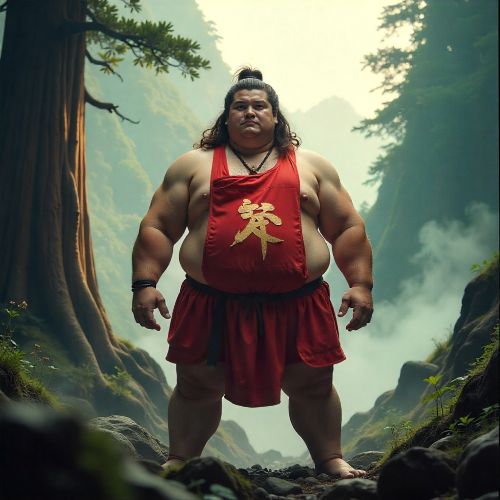
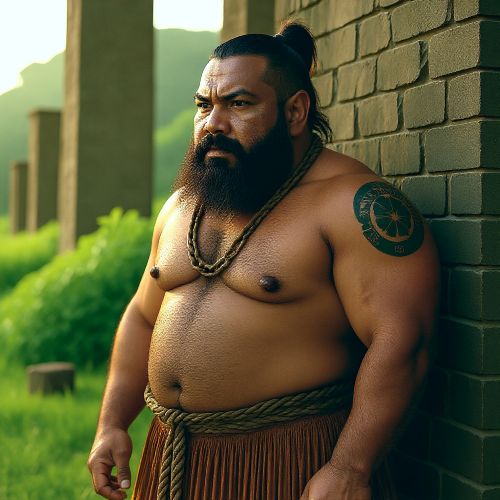
Unlike many classic heroic narratives, Thánh Gióng’s physical transformation is central to his legend. For the first three years of his life, he is described as an immobile and silent child unable to speak, smile, or walk. But once destiny calls, he undergoes an extraordinary metamorphosis — growing into a towering warrior giant who demands armor and weapons large enough to match his newly awakened strength. Stories emphasize his superhuman size, formidable physique, and the awe he inspires while mounted upon his iron horse, flames bursting from its body as they ride into battle. He is a figure who embodies the sudden emergence of unstoppable power at a time of dire need.
Family
Thánh Gióng is said to be born to a humble farming couple in the village of Gióng, located in present-day Hanoi. His mother is blessed by a divine encounter — stepping into a giant footprint said to belong to a celestial being. This miraculous conception positions Gióng as a child of heaven destined to serve a greater purpose. Despite being raised by ordinary villagers, his lineage clearly connects the mortal and the divine, reinforcing the belief that heroes can arise from unexpected origins when their homeland calls for protectors.
Other Names
Throughout Vietnam, Thánh Gióng is honored under multiple names that reflect his divine mission and heroic status. He is widely worshipped as Phù Đổng Thiên Vương, meaning the Heavenly King of Phù Đổng, a title that elevates him from warrior to celestial protector. In spiritual traditions and cultural references, he is often called Saint Gióng, affirming his revered place among Vietnam’s Four Immortals. In modern storytelling and popular culture, he is sometimes referred to as the Giant Warrior of Vietnam, a descriptive title that highlights his supernatural growth and unmatched bravery in battle. Each name represents a different aspect of his identity, from miraculous origins to national guardian, demonstrating how deeply he remains embedded in Vietnamese cultural consciousness.
Powers and Abilities
Thánh Gióng’s legendary abilities derive from a divine awakening at a crucial moment in history. When enemy forces known as the Ân invaders threaten the kingdom, he suddenly speaks for the first time, requesting armor, an iron horse, and a sword. With these, he leads the army into battle and demonstrates unmatched powers:
He rides a blazing iron horse that breathes fire as it charges through enemy lines. His strength is supernatural, enabling him to lift and strike massive weapons with ease. Even when his sword breaks during combat, he uproots bamboo trees and uses them as powerful weapons — a symbol that the land itself supports its defenders. His courage and unshakeable determination inspire soldiers and provide an archetype for Vietnam’s historical struggle for independence and freedom.
After driving out all invaders, Thánh Gióng ascends into the sky rather than returning home, marking his transformation into an immortal guardian.
Modern Day Influence
The legacy of Thánh Gióng remains deeply embedded in Vietnam’s cultural and national identity. He is revered as an Immortal Spirit and a symbol of patriotism, especially associated with defending sovereignty in times of war. Annual festivals dedicated to him — especially the UNESCO-recognized Gióng Festival in Sóc Temple and Phù Đổng Village — draw thousands who reenact the victorious battle. Statues commemorating him stand tall in Hanoi and other regions, showcasing his role as a cultural and historical icon.
Thánh Gióng also influences education, literature, performing arts, and children’s storytelling, where his miraculous growth reflects the belief that greatness can emerge from anyone when their nation needs them. Military units and youth organizations often draw from his symbolism, using his name to reinforce resilience and unity.
In modern national consciousness, Thánh Gióng continues to represent the spirit of Vietnam — a blend of legendary bravery, moral duty, and the unbreakable strength of a people who rise together against overwhelming odds.
Related Images


 What Were Odin’s Riddles, and Why Were They Deadly?
 Akan Caribbean Mythology: African Beliefs That Crossed the Atlantic
 Why the Solar Solstice marked the most powerful days of the ancient world
 Solar Equinox in Ancient Belief: Light, Darkness and Divine Harmony
 Saptamatrika : The Seven Mother Goddesses Who Shape Cosmic Power



Sources
Dinh, H. H. (2020). The symbol of Saint Gióng and the Gióng festival in the historical context of Vietnam. Asian Education and Development Studies, 9(1), 37–45.
“Gióng festival of Phù Đổng and Sóc temples.” (n.d.). UNESCO. Retrieved from https://ich.unesco.org/en/RL/giong-festival-of-phu-djong-and-soc-temples-00443
“The Saint Gióng.” (n.d.). Vietnam National Administration of Tourism. Retrieved from https://www.vietnamtourism.org.vn/attractions/culture/myths-legends-folklores/the-saint-giong.html
“Thánh Gióng.” (n.d.). In Wikipedia. Retrieved from https://en.wikipedia.org/wiki/Th%C3%A1nh_Gi%C3%B3ng
“Four Immortals.” (n.d.). In Wikipedia. Retrieved from https://en.wikipedia.org/wiki/Four_Immortals
“Legend of Saint Giong.” (n.d.). VivuTravel. Retrieved from https://www.vivutravel.com/vietnam-travel-guide/vietnamese-myths-and-legends/legend-of-saint-giong
“Gióng Festival.” (n.d.). In Wikipedia. Retrieved from https://en.wikipedia.org/wiki/Gi%C3%B3ng_Festival
Hoang Ha. (2018, December 25). Visiting Thanh Giong in Phu Dong temple. Hanoi Times. Retrieved from https://hanoitimes.vn/visiting-thanh-giong-in-phu-dong-temple-293.html
Frequently Asked Questions
What is the story of Thanh Giong?
Thanh Giong is a legendary Vietnamese hero who grew from a silent boy into a giant warrior. He defeated invaders with an iron horse and sword, and then flew away, symbolizing Vietnam’s resistance against foreign invasion.
What is the iron horse myth?
The “Iron Horse” myth in Vietnam is associated with the legendary hero Thanh Giong, also known as Phù Đổng Thiên Vương. According to the legend, Thanh Giong was a boy who didn’t speak or move until he was three years old. When Vietnam was invaded, he began to speak and asked the king for an iron horse, a sword, and armor. Riding the iron horse and wielding the sword, he defeated the invaders.
What is the Gióng Festival and how does it honour Thánh Gióng?
The Gióng Festival, celebrated in spring at temples in Phù Đổng and Sóc near Hanoi, re-enacts Thánh Gióng’s legendary battle and celebrates his heroism. The festival includes rituals, performances, and symbolic ceremonies — reflecting both myth and communal memory. It has also been inscribed on the UNESCO Representative List of the Intangible Cultural Heritage of Humanity
What does the horse mean in Vietnam?
In Vietnam, the horse is frequently linked to attributes such as power, pride, vitality, and speed. It serves as a symbol of freedom, ambition, spirituality, and the strength that comes from collaborative efforts within a team. In Vietnamese mythology, the horse, particularly the iron horse, is connected with the legendary hero Thanh Giong, who rode an iron horse to triumph over invaders.
Is Thánh Gióng still relevant in modern Vietnamese culture?
A3: Yes. Thánh Gióng remains deeply embedded in Vietnamese cultural identity. His myth is taught in schools, celebrated in festivals, and honored with statues and temples. He embodies ideals of resistance, unity, and national pride — values that continue to resonate in contemporary Vietnam.


Pingback: The Legend of Saint Giong
Pingback: Đền Gióng Festival Explained: Significance, Traditions, and Rituals - TravelFMT