Magu : The Chinese Goddess of Youth and Immortality
Listen
At a glance
| Description | |
|---|---|
| Origin | Chinese Mythology |
| Classification | Gods |
| Family Members | N/A |
| Region | China |
| Associated With | Hemp, Longevity, Healing |
Magu
Introduction
Magu, also called Mago, is a prominent figure in Chinese mythology and Daoist tradition, celebrated as a goddess of longevity, youth, and vitality. Often portrayed as a graceful young woman, she symbolizes immortality and the mystical connection between humanity and nature. Her influence extends deeply into Chinese culture, leaving a lasting impact on art, literature, and religious practices. Known as “Magu the Immortal,” she embodies health and the aspiration for a long life, while also serving as a protector of herbal medicines and a deity of healing.
Physical Traits
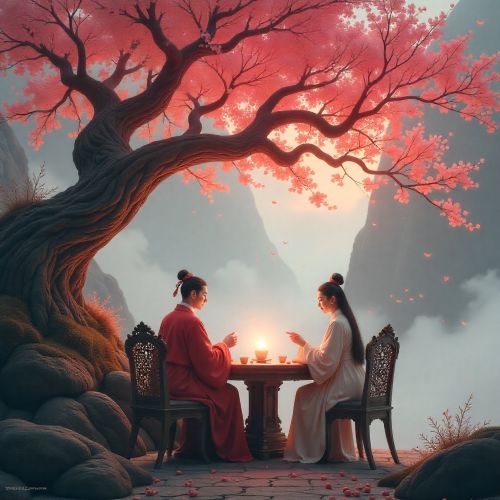
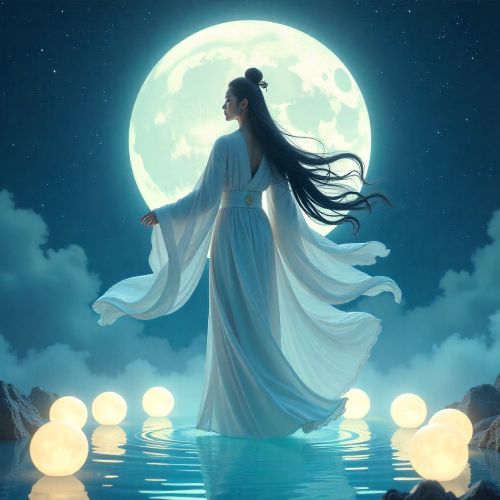
Magu is portrayed as a figure of timeless beauty, embodying immortality with her ageless appearance. She is often depicted with long, flowing hair styled in an elegant high bun, adorned with delicate flowers or jade, emphasizing her connection to nature and grace.
Her attire typically consists of flowing, ethereal robes that exude elegance and highlight her divine presence. Magu is frequently shown carrying a basket filled with medicinal herbs or peaches of immortality, underscoring her association with health and everlasting life.
In artistic depictions, she is often accompanied by symbols of longevity and prosperity, such as cranes or deer, further enhancing her role as a guardian of vitality and natural harmony. With her elongated fingers and serene demeanor, Magu’s imagery reflects a profound connection to the natural world and its healing powers.
Family
Magu’s familial connections in mythology are not explicitly defined, but her role as a celestial figure ties her to the Daoist pantheon. Recognized as one of the xian (immortals), she shares thematic links with other divine beings who represent health, longevity, and spiritual wisdom, emphasizing her place in the tapestry of Daoist beliefs.
Some traditions associate her with the Queen Mother of the West, a prominent deity connected to immortality, suggesting a symbolic lineage rather than a literal one. Additionally, Magu is often depicted alongside legendary immortals like the Eight Immortals (Ba Xian), reflecting themes of unity, shared purpose, and the pursuit of transcendence in Daoist lore.
Other names
Magu is recognized by several names that highlight various facets of her character. Her primary name, Magu, translates to “Hemp Auntie,” reflecting her association with herbal medicine. In some stories, she is linked to the legendary figure Hua Mulan, symbolizing her martial prowess and role as a protector. Additionally, she is sometimes considered an aspect of Xi Wang Mu, the Queen Mother of the West, reinforcing her connection to immortality.
Magu is also referred to as “Mago” or “Magu Xiansheng”, meaning “Immortal Saint Magu,” titles that highlight her revered status in Daoist and folk traditions. Her name and representation can vary regionally across different areas of China, with local interpretations adding unique layers to her mythological identity.
Powers and Abilities
Magu’s abilities reflect her divine role as a goddess of health, longevity, and the natural world. Central to her powers is her mastery of herbal medicine and her capacity to create potent elixirs that restore vitality and cure ailments. Legends frequently depict her as a healer who uses her deep understanding of plants and their properties to benefit mortals.
She is also renowned for her association with immortality, often symbolized by her connection to the peaches of immortality. These mythical fruits, said to grant eternal life, reinforce her significance as a figure sought after by those yearning for longevity and spiritual enlightenment.
Magu’s bond with nature extends beyond her role as a healer; she is portrayed as having control over natural elements, particularly flora, enabling her to foster harmony between humans and their environment. Through her powers, Magu embodies the ideals of balance, vitality, and the eternal connection between life and nature.
Modern Day Influence
Magu’s legacy endures in contemporary culture, seamlessly blending tradition with modern relevance. Her image often resurfaces in popular media, where she is reimagined in animations, television series, and novels, symbolizing resilience, empowerment, and a deep connection to nature.
As a cultural icon, Magu embodies the ideals of holistic health and wellness. She has become a symbol for the resurgence of interest in natural medicine, herbal remedies, and sustainable practices, aligning with modern movements that emphasize harmony with the environment.
In literature and art, Magu remains an inspiring muse. Writers and artists frequently explore her themes of immortality and vitality, presenting her as a figure of timeless beauty and wisdom. Her serene image appears in paintings, sculptures, and poetry that celebrate her ethereal grace and enduring relevance.
Magu’s influence also lingers in rituals and festivals dedicated to her in specific regions, preserving her role in traditional practices. Furthermore, her association with herbal medicine continues to shape aspects of traditional Chinese medicine, reflecting her lasting impact on health and longevity in cultural narratives.
Related Images


 What Were Odin’s Riddles, and Why Were They Deadly?
 Akan Caribbean Mythology: African Beliefs That Crossed the Atlantic
 Why the Solar Solstice marked the most powerful days of the ancient world
 Solar Equinox in Ancient Belief: Light, Darkness and Divine Harmony
 Saptamatrika : The Seven Mother Goddesses Who Shape Cosmic Power


Source
“ Magu (deity) .” (n.d.). In Wikipedia. Retrieved from https://en.wikipedia.org/wiki/Magu_(deity)
“Magu, Goddess of Longevity.” (n.d.). Google Arts & Culture. Retrieved from https://artsandculture.google.com/asset/magu-goddess-of-longevity/xgFECOBWZ_bHGw
“Magu Goddess: The Hemp Healer of Women in Taoist Mythology.” (2024, January 9). Green Nursery Blog. Retrieved from https://greennursery.com/green-nursery-blog/magu-goddess-the-hemp-healer-of-women-in-taoist-mythology/
Geng, Q. (2023). A goddess with bird’s claws: An exploration of the image evolution of Magu. Religions, 14(7), 944. https://doi.org/10.3390/rel14070944
Campany, R. F. (2002). To live as long as heaven and earth: Ge Hong’s traditions of divine transcendents. University of California Press.
Eberhard, W. (1968). The local cultures of South and East China. E.J. Brill.
Needham, J. (1974). Science and civilisation in China: Volume 4, Physics and physical technology, part 3: Civil engineering and nautics. Cambridge University Press.
Frequently Asked Questions
Who is Magu in Chinese mythology?
Magu is an immortal deity celebrated as the Goddess of Youth, Longevity, and Spring, often associated with everlasting life and natural renewal.
What does Magu look like?
She is commonly depicted as a beautiful young woman with long flowing hair and an ethereal glow, symbolizing eternal youth and divine vitality.
Why is Magu connected to peaches and immortality?
Legends describe her serving the peaches of immortality at heavenly banquets, linking her to the Daoist belief in long life and spiritual transcendence.
Where is Magu worshipped or celebrated?
She appears prominently in Daoist traditions, folk celebrations, and artworks throughout East Asia, especially in regions where longevity is culturally revered.
What does Magu represent spiritually?
Magu embodies themes of healing, rejuvenation, nature, and feminine power, offering blessings of health and vitality to those who honor her.