Huldufolk : The Hidden People
Listen
At a glance
| Description | |
|---|---|
| Origin | Icelandic Mythology |
| Classification | Spirits |
| Family Members | N/A |
| Region | Iceland |
| Associated With | Invisibility, Healing |
Huldufolk
Introduction
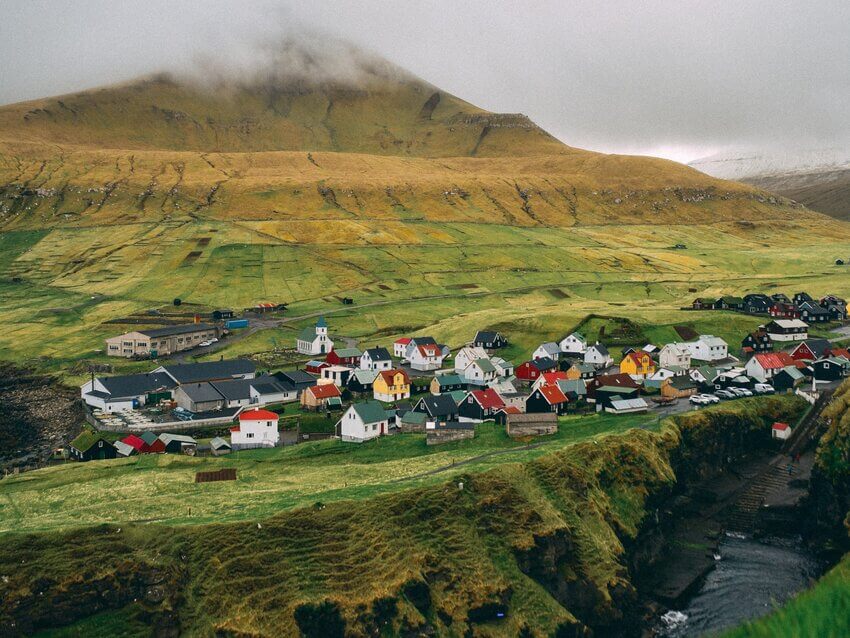
Huldufólk, meaning “hidden people,” are mysterious supernatural beings deeply rooted in Icelandic and Faroese folklore. They are often described as invisible entities who live parallel to humans, appearing only when they choose to. These beings embody Iceland’s profound connection to its rugged natural environment, where volcanic rocks, moss-covered hills, and misty landscapes create an atmosphere conducive to mystery and myth. The belief in Huldufólk, though ancient, continues to thrive in modern Iceland, reflecting a cultural blend of spirituality, respect for nature, and storytelling tradition. Their presence in folklore highlights the Icelandic worldview that the unseen world exists in harmony with the visible, and that balance with nature must be maintained.
The origins of the Huldufólk myth stretch back to medieval Christianity and Norse paganism. One enduring tale suggests they were the hidden children of Eve—concealed from God and cursed to remain invisible forever. Another interpretation links them to fallen angels who, neutral in the war between Heaven and Hell, were condemned to dwell on Earth. Over centuries, these legends evolved into a uniquely Icelandic expression of faith, ecology, and imagination.
Physical Traits
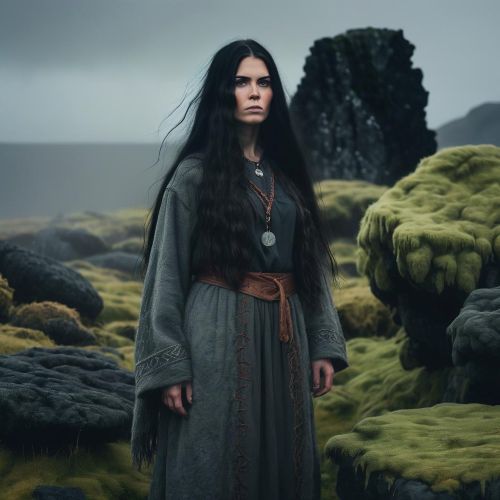
Descriptions of the Huldufólk vary across regions, but they are almost always portrayed as eerily similar to humans. They are said to be tall, slender, and exceptionally beautiful, often with dark hair and wearing simple, grey or green garments that blend seamlessly into Iceland’s rocky landscapes. In Faroese accounts, they are large in build, with black hair and somber expressions. One curious feature occasionally mentioned in Icelandic sources is their convex philtrum—the groove between the nose and upper lip—which distinguishes them subtly from humans.
Huldufólk can pass unnoticed in human settlements, and some tales claim that travelers have unknowingly shared meals or dances with them, only to find their hosts vanished when dawn breaks. Their invisibility is not merely physical; it represents a metaphysical boundary between the human world and the hidden realm. Many Icelanders believe that certain boulders, hills, and lava formations are homes of the hidden people, and disturbing these natural landmarks invites misfortune. The Icelandic landscape, shaped by volcanoes and glaciers, is thus not only a geological wonder but also a spiritual habitat intertwined with these unseen beings.
Family
Within their hidden world, Huldufólk are believed to live in family groups mirroring human society. They are said to maintain farms, herds, and even churches beneath the earth or inside mountains. Their social structures reflect an idealized version of human communities—peaceful, industrious, and self-sufficient. Folk tales often describe them celebrating weddings, raising children, and tending livestock much like their human counterparts, though in perfect harmony with nature.
Encounters between humans and Huldufólk families feature prominently in Icelandic folklore. Some stories tell of marriages between humans and hidden people, resulting in descendants who are exceptionally gifted or beautiful. Others recount tragic separations, where a human spouse is forbidden to speak of the hidden world and suffers consequences for breaking the taboo. The “Hidden Born”—children of two Huldufólk parents—are said to have connections to angelic realms, emphasizing their divine yet earthly duality. In 19th-century Iceland, women often told such tales as metaphors for societal expectations, independence, and the balance between duty and desire.
Other names
The name Huldufólk literally means “hidden people,” but they are often associated or even conflated with álfar—the elves of Old Norse mythology. While many Icelanders use the terms interchangeably, scholars suggest that álfar stem from pre-Christian mythological traditions, while Huldufólk are later Christian-era adaptations of those beliefs. The term “huldufólk” may have originally served as a respectful euphemism, avoiding the direct mention of elves, whose names were thought to bring misfortune if spoken aloud.
In other parts of Scandinavia, similar beings appear under different names: the Norwegian huldra, the Swedish huldrefolk, and the Faroese huldufólk. Though each has regional variations, their essence remains the same—they are nature’s hidden inhabitants, existing on the border between the material and spiritual worlds. This cross-cultural continuity suggests that the belief in hidden or nature-bound beings predates Iceland’s settlement and reflects a shared Northern European reverence for the land’s mysteries.
Powers and Abilities
The most notable power of the Huldufólk is invisibility. They can appear and vanish at will, revealing themselves only to chosen individuals or those who show deep respect for their realm. Some stories describe them manipulating the weather, blessing the righteous, or cursing those who harm the earth. They are said to guard sacred sites—rocks, waterfalls, or lava fields—and bring misfortune to those who disturb them. Construction machinery breaking down, tools disappearing, or sudden storms are often attributed to the anger of these hidden protectors.
Huldufólk also possess healing abilities and magical knowledge of herbs and minerals. They are skilled musicians, dancers, and craftsmen, and their songs are said to possess enchanting, almost hypnotic power. However, their relationship with Christianity is complex; many tales describe them as avoiding churches or vanishing when confronted with holy symbols, reinforcing their connection to an older, nature-based spirituality. Despite their supernatural might, they are not evil beings but guardians of balance—rewarding kindness, honesty, and respect toward nature.
Modern Day Influence
Belief in Huldufólk remains alive in modern Icelandic culture. Surveys indicate that while only a small percentage of Icelanders claim absolute belief, nearly half are open to the possibility of their existence. This cautious respect translates into real-world decisions—roads and construction projects have been rerouted to avoid rocks believed to house Huldufólk. In 2013, for example, roadwork near Reykjavik was halted after protests by locals who feared it would disturb an “elf church,” a large lava rock said to be one of their sacred dwellings. Eventually, the rock was moved only after rituals and consultation with a seer, symbolizing Iceland’s unique blend of pragmatism and reverence.
The influence of Huldufólk extends into tourism, art, and national identity. Elf tours, museums, and storytelling events attract thousands of visitors each year. The Icelandic Elf School in Reykjavik educates curious travelers about Huldufólk folklore, while the town of Hafnarfjörður hosts a “Hidden Worlds” tour highlighting known elf dwellings. In literature, film, and music, these beings represent a living link to Iceland’s mythic past and ecological ethics. They appear in international media as well, such as Disney’s Frozen II and in the Nordic folk music of the group SKÁLD’s 2023 album Huldufólk.
Today, the hidden people symbolize more than superstition—they represent environmental consciousness, cultural identity, and respect for unseen forces. Icelanders’ careful coexistence with nature mirrors their enduring relationship with these mysterious beings. In a world driven by technology and urbanization, the stories of the Huldufólk remind humanity that not all realms are visible—and that the health of the earth depends on how we treat both the seen and the unseen.
Related Images
 What Were Odin’s Riddles, and Why Were They Deadly?
 Akan Caribbean Mythology: African Beliefs That Crossed the Atlantic
 Why the Solar Solstice marked the most powerful days of the ancient world
 Solar Equinox in Ancient Belief: Light, Darkness and Divine Harmony
 Saptamatrika : The Seven Mother Goddesses Who Shape Cosmic Power


Source
Astonishing Legends. (2024, March 19). Huldufólk. AstonishingLegends.com. https://astonishinglegends.com/astonishing-legends/2024/3/20/hulduflk
Andersen, V. H. (2017, November). The huldufolk (hidden people) of Iceland. High on Adventure. https://www.highonadventure.com/hoa17nov/vicki/hidden-people.htm
Types of huldufolk. (n.d.). The Huldufólk: The Hidden People. https://thehuldufolk.com/book/society/types-of-huldufolk/
The Dockyards. (2016, May 27). Huldufólk (elves) in Icelandic and Faroese folklores. TheDockyards.com. https://www.thedockyards.com/huldufolk-icelandic-folklore/
Visit Vágar. (2023, August 31). Huldufólk. VisitVagar.fo. https://visitvagar.fo/en/about5/stories-and-legends0/huldufolk
Panorama Glass Lodge. (2025, April 23). Do hidden people & elves really exist in Iceland? Discover the truth. PanoramaGlassLodge.com. https://panoramaglasslodge.com/do-hidden-people-elves-really-exist-in-iceland-discover-the-truth/
Wikipedia. (2006, February 28). Huldufólk. Wikipedia. https://en.wikipedia.org/wiki/Hulduf%C3%B3lk
Heroic Age 13. (2010). Folktales of the huldufólk: Their role and purpose in Icelandic cosmography [PDF]. Academia.edu. https://www.academia.edu/19317212/Folktales_of_the_hulduf%C3%B3lk_Their_role_and_purpose_in_Icelandic_cosmography
Jón Árnason. (1862). Íslenzkar þjóðsögur og æfintýri [Icelandic Folk Tales and Fairy Stories]. Reykjavík: Hið Íslenzka Bókmenntafélag.
Simpson, J., & Roud, S. (2000). A Dictionary of English Folklore. Oxford University Press.
Gíslason, S. (2012). Nature and Supernatural in Icelandic Folklore. University of Iceland Press.
Hastrup, K. (1990). Nature and Policy in Iceland 1400–1800: An Anthropological Analysis of History and Mentality. Oxford University Press.
Alda Sigmundsdóttir. (2014). The Little Book of the Hidden People. Little Books Publishing.
Frequently Asked Questions
What is lorem Ipsum?
I am text block. Click edit button to change this text. Lorem ipsum dolor sit amet, consectetur adipiscing elit. Ut elit tellus, luctus nec ullamcorper mattis, pulvinar dapibus leo.
What is lorem Ipsum?
I am text block. Click edit button to change this text. Lorem ipsum dolor sit amet, consectetur adipiscing elit. Ut elit tellus, luctus nec ullamcorper mattis, pulvinar dapibus leo.
What is lorem Ipsum?
I am text block. Click edit button to change this text. Lorem ipsum dolor sit amet, consectetur adipiscing elit. Ut elit tellus, luctus nec ullamcorper mattis, pulvinar dapibus leo.
What is lorem Ipsum?
I am text block. Click edit button to change this text. Lorem ipsum dolor sit amet, consectetur adipiscing elit. Ut elit tellus, luctus nec ullamcorper mattis, pulvinar dapibus leo.
What is lorem Ipsum?
I am text block. Click edit button to change this text. Lorem ipsum dolor sit amet, consectetur adipiscing elit. Ut elit tellus, luctus nec ullamcorper mattis, pulvinar dapibus leo.