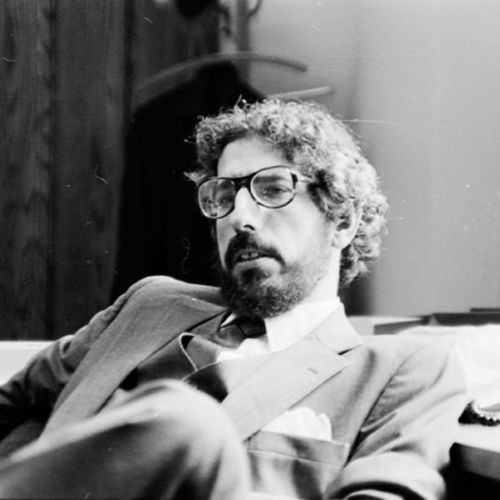
Mary Beard : Rethinking Rome and Classical Antiquity
Dame Mary Beard
Introduction
Mary Beard, born on January 1, 1955, in Much Wenlock, Shropshire, is widely regarded as one of the most influential interpreters of the ancient world today. As a Professor of Classics at the University of Cambridge and a Fellow of Newnham College, she has reshaped how both scholars and the general public understand Roman history, religion, and myth. Trained as a rigorous academic yet committed to accessibility, Beard has built a career that dissolves the traditional barrier between university scholarship and everyday curiosity about antiquity. Her work consistently argues that the ancient world was complex, argumentative, and diverse, rather than a neat foundation myth for modern Europe.
Educated at Newnham College, Cambridge, Beard completed her doctorate in 1982 with a thesis on state religion in the late Roman Republic based on Cicero’s writings. After early teaching at King’s College London, she returned to Cambridge in 1984, at a time when the classics faculty was still overwhelmingly male. Her rise to Professor of Classics in 2004 marked not only personal achievement but also a broader cultural shift within the discipline. Today, the name Mary Beard is synonymous with clear thinking, intellectual courage, and an insistence that the ancient world must be questioned rather than revered.
Area of Expertise
Mary Beard’s core expertise lies in the history, culture, and religion of ancient Rome. Rather than treating ancient texts as neutral records of fact, she approaches them as argumentative documents shaped by the prejudices, anxieties, and ambitions of their authors. This method has led her to rethink Roman religion as a lived civic practice rather than a static collection of myths, emphasizing rituals, festivals, and public performance as expressions of political power.
Her scholarship also examines everyday life in antiquity, from humor and graffiti to food, housing, and social conflict. Beard has consistently argued that Roman society cannot be understood solely through emperors and elites, but must include slaves, women, migrants, and the urban poor. A significant strand of her work explores gender and authority, tracing how classical myths and historical narratives have shaped long-lasting ideas about who is permitted to speak in public. Through lectures and essays, she has connected ancient silencing of women to modern political and cultural structures, making her work particularly resonant beyond classical studies.
Books & Publications
Mary Beard’s books are central to her influence, combining scholarly precision with an engaging narrative voice. Pompeii: The Life of a Roman Town, winner of the Wolfson History Prize, reconstructs daily life in Pompeii through archaeology, inscriptions, and material culture, challenging romanticized visions of the ancient city. SPQR: A History of Ancient Rome traces Rome’s development from a small settlement to a vast empire, focusing on citizenship, debate, and political struggle rather than imperial inevitability.
In The Roman Triumph, Beard dismantles the idea of triumphs as straightforward celebrations, revealing them instead as contested rituals loaded with anxiety and symbolism. Her later works expand into reception and power, examining how images, stories, and myths from antiquity are reused across centuries. Alongside monographs, Beard has edited major academic volumes, written countless essays, and served for decades as classics editor of The Times Literary Supplement, shaping intellectual debate far beyond her own publications.
Research & Contributions
Beard’s research has played a major role in redefining classical studies as a field that welcomes disagreement and uncertainty. Her work on Roman religion emphasized that belief mattered less than practice, a perspective that transformed how scholars interpret temples, priesthoods, and festivals. Her studies of laughter and humor in Rome demonstrated that jokes and mockery were powerful social tools, capable of reinforcing or undermining authority.
Beyond academia, Beard’s public engagement is unparalleled among classicists. Through BBC documentaries, radio programs, and public lectures, she has presented ancient Rome as a society full of argument, contradiction, and relevance. Her long-running blog, A Don’s Life, reflects on everything from Latin inscriptions to modern politics, illustrating how classical thinking can illuminate contemporary debates. She has also been a vocal advocate for diversity in the study of antiquity, challenging assumptions about race, ethnicity, and cultural ownership of the classical past.
Awards & Recognitions
Mary Beard’s contributions have been recognized with numerous international honors. She was awarded the Wolfson History Prize in 2009 for Pompeii: The Life of a Roman Town and received the Princess of Asturias Award for Social Sciences in 2016. In the United Kingdom, she was appointed Dame Commander of the Order of the British Empire in 2018 for services to classical scholarship. Additional honors include the Bodley Medal, the J. Paul Getty Medal, and fellowships in institutions such as the British Academy and the Royal Society of Literature. These recognitions reflect both her scholarly authority and her impact on public culture.
Social Media Profiles
Mary Beard has embraced digital platforms as an extension of her academic role. Active on X (formerly Twitter) under the handle @wmarybeard, she engages directly with readers, students, and critics, discussing classics, politics, and public discourse. Her online presence is marked by a refusal to retreat from controversy, even in the face of sustained abuse, which she has addressed openly as part of a broader conversation about women’s voices in public life. Through her blog and media appearances, Beard continues to demonstrate that scholarship need not be confined to lecture halls or journals to be serious and transformative.
Sources
Beard, M. (n.d.). A Don’s Life. The Times Literary Supplement. https://www.the-tls.co.uk/articles/a-dons-life-mary-beard/
University of Cambridge. (n.d.). Professor Dame Mary Beard. https://www.cam.ac.uk/research/features/dame-mary-beard
BBC. (n.d.). Mary Beard. https://www.bbc.co.uk/programmes/profiles/2nQv0v3qZ0Y7c9qk9PpZbZ/mary-beard
Beard, M. (1994). Looking (harder) for Roman myth. The Classical Quarterly, 44(2), 431–446.
https://www.jstor.org/stable/639015
Beard, M. (2007). The Roman triumph. Harvard University Press.
Beard, M. (2008). Pompeii: The life of a Roman town. Profile Books.
Beard, M. (2015). SPQR: A history of ancient Rome. Profile Books.









Frequently Asked Questions
Who is Mary Beard and why is she famous?
Mary Beard is a British classicist known for making ancient Roman history and mythology accessible through books, documentaries, and public scholarship.
What is Mary Beard best known for?
She is best known for her work on Roman history, religion, daily life, and her bestselling book SPQR: A History of Ancient Rome.
Is Mary Beard a historian or a mythologist?
She is a historian and classicist whose work frequently examines mythology, ritual, and their social and political meanings.
What are Mary Beard’s most important books?
Key works include Pompeii: The Life of a Roman Town, SPQR, and The Roman Triumph.
How has Mary Beard influenced modern views of the ancient world?
She has emphasized diversity, debate, and everyday experience in antiquity, challenging idealized and Eurocentric interpretations.