Yeleen (1987)

| Description | |
|---|---|
| Country of Origin | Mali, Burkina Faso |
| Language | Bambara, Fula |
| Genre | Fantasy |
| Cast | Issiaka Kane, Aoua Sangare, Niamanto Sanogo |
| Directed by | Souleymane Cissé |
Yeleen, directed by Souleymane Cissé, is not simply a historical or fantasy film; it is a cinematic ritual shaped by myth, cosmology, and ancestral memory. Rooted in Bambara spiritual traditions, the film unfolds like an oral legend passed through generations, where time is circular, knowledge is dangerous, and power is never morally neutral. Cissé does not explain this world to the viewer in conventional terms. Instead, he invites the audience to witness it, much as one would listen to a griot narrate a sacred story whose meanings deepen with reflection. In doing so, Yeleen becomes one of African cinema’s most profound mythological statements.
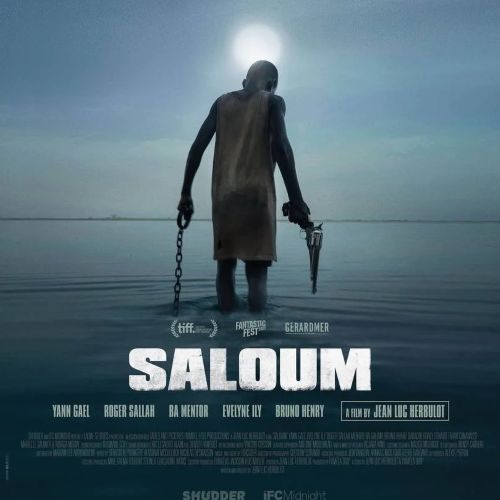
At the heart of the film is the conflict between father and son, Soma and Nianankoro, a struggle that echoes mythic archetypes found across cultures but is distinctly grounded in West African spiritual philosophy. Knowledge in Yeleen is not enlightenment in the modern sense; it is a volatile force inherited through bloodlines and guarded by elders. Soma’s fear of his son is not personal jealousy but cosmological anxiety—an elder terrified that sacred power has fallen into unregulated hands. This dynamic mirrors mythological traditions from the Saloum cultural sphere, where spiritual authority is often tied to lineage, initiation, and restraint rather than innovation. Power, when misused, threatens not only individuals but the balance of the world itself.
The film’s mythological depth is expressed visually rather than verbally. Natural elements—fire, earth, water, and light—are not symbolic decorations but active participants in the story. Fire in particular functions as both creation and annihilation, echoing Saloum-era cosmologies in which elemental forces are extensions of ancestral will. When supernatural events occur, they are presented without spectacle or exaggeration. Miracles feel heavy, slow, and costly, reinforcing the idea that magic is never free. This restrained depiction aligns closely with oral myth traditions, where the supernatural is woven seamlessly into everyday life rather than separated as fantasy.
What makes Yeleen especially powerful is its refusal to frame mythology as something distant or obsolete. The film situates myth as lived reality, shaping ethics, politics, and family structures. The journey Nianankoro undertakes is not a heroic quest for glory but a spiritual trial defined by suffering, patience, and moral testing. His encounters resemble initiation rites found in Saloum-influenced traditions, where isolation, endurance, and silence are necessary steps toward wisdom. Even the landscape feels myth-aware, as deserts and villages seem to remember what has happened before, reinforcing the sense that history and myth are inseparable.
Cissé’s pacing and narrative minimalism demand active participation from the viewer, much like listening to a sacred tale whose lessons are not spelled out. This approach makes Yeleen especially relevant in discussions of African mythological cinema, as it resists Western narrative structures that prioritize explanation over experience. Instead, the film trusts myth to speak through rhythm, image, and consequence. It is this trust that allows Yeleen to transcend its historical setting and function as a timeless meditation on power, inheritance, and spiritual responsibility.
Ultimately, Yeleen stands as a rare cinematic work where mythology is not adapted or modernized but allowed to exist on its own terms. Its engagement with Saloum-rooted spiritual ideas—ancestral authority, elemental balance, and the danger of unrestrained knowledge—gives the film a gravity that lingers long after the final scene. More than a film, Yeleen is a reminder that mythology is not merely about the past; it is a living framework through which societies understand power, morality, and survival.