Kumarbi : Father of the Gods
Listen
At a glance
| Description | |
|---|---|
| Origin | Hurrian Mythology |
| Classification | Hybrids |
| Family Members | Alalu (Father), Teshub, Tašmišu, Aranzaḫ, Ḫedammu and Ullikummi (Children) |
| Region | Turkey, Syria, Iran, Iraq |
| Associated With | Supreme powers, Sky |
Kumarbi
Introduction
Kumarbi, revered as the “father of gods,” stands as one of the most influential deities in Hurrian mythology. His tales, preserved through the Kumarbi Cycle, form the cornerstone of Hurrian and Hittite cosmological traditions, depicting a timeless struggle for divine supremacy. Composed around the 14th–13th centuries BCE, these myths—recorded in Hittite but derived from Hurrian originals—capture the intricate web of power, creation, and conflict among the gods. At the heart of the stories lies Kumarbi’s rebellion against his father Anu, his brief reign over heaven, and his eventual downfall at the hands of his own son, Teshub, the storm god. Beyond mere tales of succession, the Kumarbi Cycle reflects the Hurrian worldview, where fertility, chaos, and renewal are intertwined in the cosmic order. Kumarbi’s mythic narrative not only shaped the spiritual consciousness of the Hurrians but also deeply influenced later traditions, especially the Greek Theogony, showing how his legacy bridged the ancient Near East and the Mediterranean world.
Physical Traits
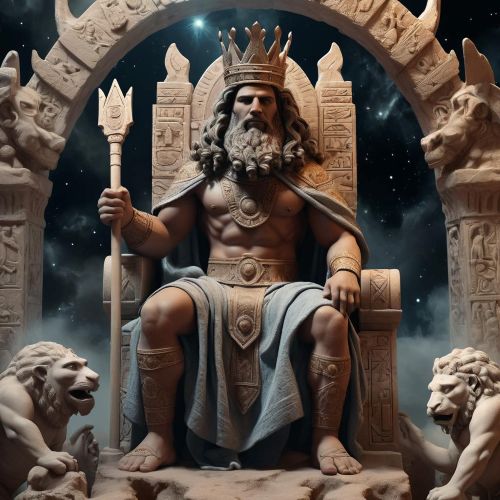
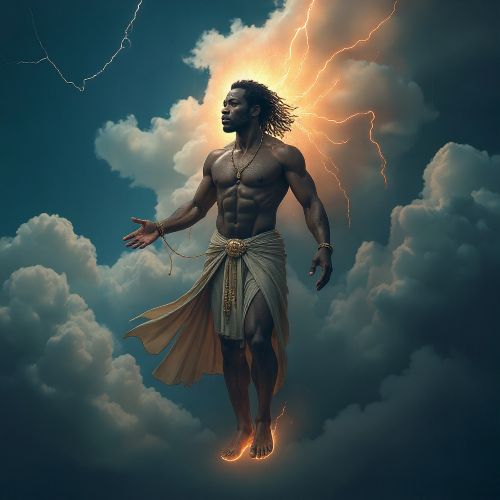
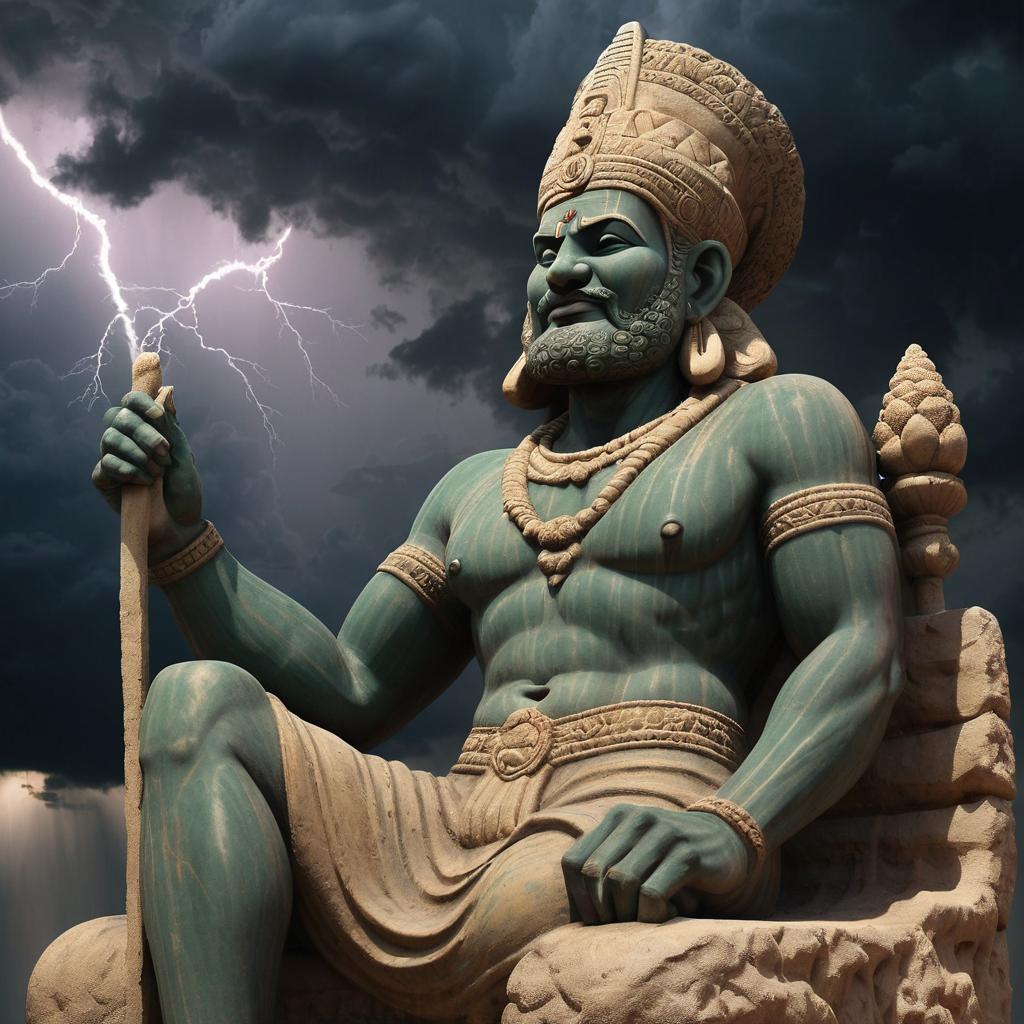
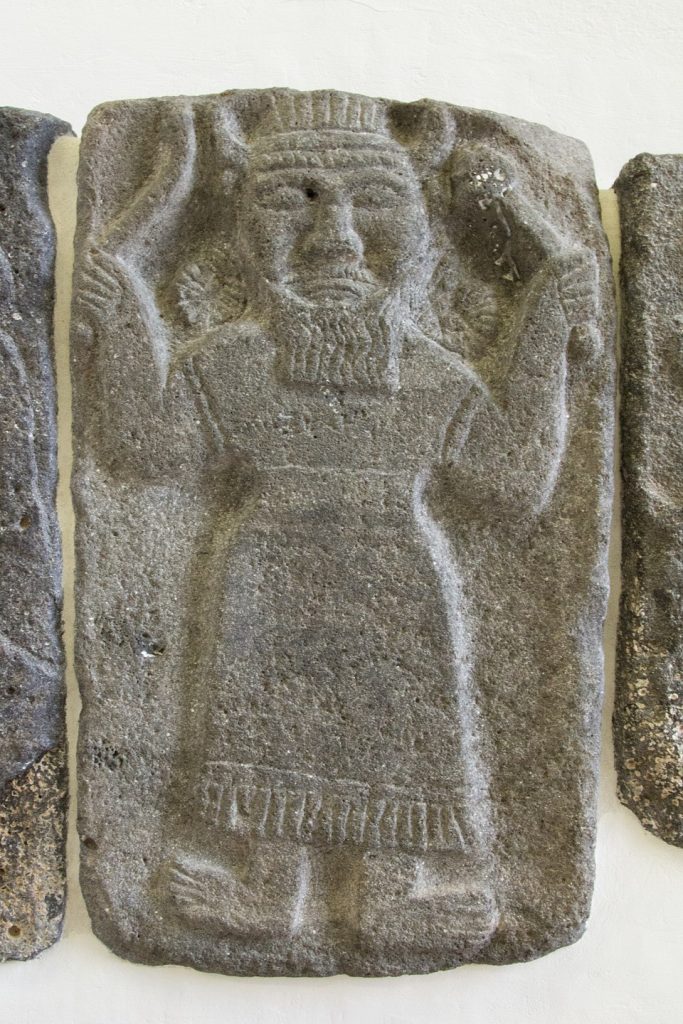
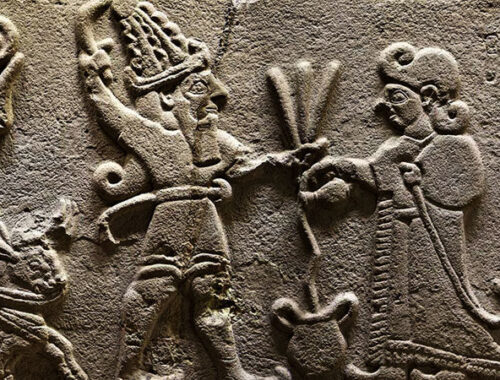
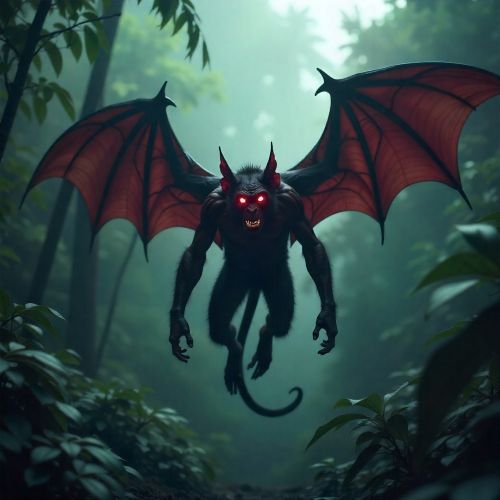
Unlike gods who were frequently depicted in temples or artifacts, Kumarbi’s appearance remains mostly described through symbolic references rather than visual portrayals. He is imagined as an elder god embodying both authority and age, signifying the early generation of divine rulers. Some interpretations describe him with long hair and a robust, dignified presence, befitting his status as a primordial father figure. There are subtle associations between Kumarbi and agricultural fertility, possibly due to his link with the earth and harvest cycles. Scholars note that in some depictions, he may hold a stalk of grain, reinforcing his role as a deity of abundance and regeneration. His physicality, therefore, serves not as a detailed description but as a reflection of his cosmic role—the embodiment of the earth’s fertility and the foundation upon which divine order was built.
Family
Kumarbi’s lineage defines much of Hurrian mythology’s narrative structure. In the divine succession myth, he is the son of Alalu, the first king of heaven. When Anu overthrows Alalu, Kumarbi rises in rebellion, attacking and biting off Anu’s genitals—an act that symbolizes both his violent usurpation of power and the paradoxical creation of new gods. From this act of defiance, Kumarbi becomes pregnant with several deities, including Teshub, the storm god; Tašmišu, his loyal brother; and Aranzaḫ, the river god representing the Tigris. He is also associated with monstrous offspring such as the stone giant Ullikummi and the sea serpent Ḫedammu, each conceived to challenge Teshub’s dominion. Kumarbi’s consort, often named Shalash, appears in certain myths as a maternal goddess figure, though her role varies across texts. The divine genealogy not only traces the succession of power but mirrors natural cycles—where destruction leads to creation, and rebellion births renewal. In this sense, Kumarbi’s family drama encapsulates both the instability and inevitability of cosmic order in Hurrian thought.
Other names
Across the vast Hurrian cultural landscape, Kumarbi was known by several variants, including Kumurwe, Kumarwi, and Kumarma. These linguistic variations reflect regional adaptations of the deity’s worship across Anatolia, Syria, and Mesopotamia. The suffixes “-bi” or “-we” in his name likely denote belonging or origin, suggesting a title rather than a personal name. His identification with other deities further reveals the cross-cultural fluidity of ancient religions: in Mesopotamia, he was equated with Enlil, the air god and ruler of the gods; in Syria, he corresponded with Dagan, a deity of fertility and the underworld; and in later Greek interpretations, he became synonymous with Cronus, the Titan who overthrew Uranus. Such associations underline his archetypal role as the dethroned father of gods—a motif that transcends linguistic and regional boundaries. Through these adaptations, Kumarbi emerged as a symbol of primordial authority and the perpetual tension between old and new divine orders.
Powers and Abilities
Kumarbi’s power extended far beyond physical might; it lay in his creative and generative essence. As the “father of gods,” he was both destroyer and creator—a paradoxical figure embodying chaos and continuity. His most defining act, biting off Anu’s genitals, led to the conception of the next generation of gods, representing how conflict begets creation. He wielded control over fertility and the earth, standing as a chthonic counterpart to his son Teshub, the sky and storm god. Kumarbi’s dominion over subterranean realms and natural elements emphasized his connection to regeneration and the cyclical nature of life. In myths like the Song of Ullikummi, he demonstrates his cunning by creating monstrous beings from stone and sea to challenge Teshub, revealing his mastery over primordial forces. These acts highlight not just his resilience but also the depth of his divine intellect—using creation itself as a weapon in his endless struggle for supremacy. Despite his repeated defeats, Kumarbi’s power endures symbolically, embodying the unbroken cycle of death and rebirth inherent in the natural and divine worlds.
Modern Day Influence
The legacy of Kumarbi extends far beyond the Bronze Age, echoing through millennia of mythology and literature. His stories, particularly the Kingship in Heaven and Song of Ullikummi, bear striking resemblance to Greek myths found in Hesiod’s Theogony. The parallels are unmistakable: Anu mirrors Uranus, Kumarbi parallels Cronus, and Teshub aligns with Zeus. Both mythic traditions revolve around divine succession, generational conflict, and the violent overthrow of ruling gods. Scholars like Hans Güterbock and Harry Hoffner have argued that these similarities are not coincidental but rather the result of cultural transmission through trade and conquest between Anatolia and the Aegean.
In modern scholarship, Kumarbi represents more than a historical curiosity—he embodies the archetype of rebellion against authority and the cyclical transformation of power. His myth has been studied in comparative mythology, psychoanalysis, and theology as a narrative of cosmic renewal. The idea of a son surpassing the father, born out of conflict and creation, continues to resonate in storytelling across cultures, from epic poetry to modern fantasy.
Kumarbi’s influence also surfaces in museum exhibitions and academic reconstructions of Near Eastern religions, where his myths help contextualize the evolution of divine kingship and creation narratives. Digital archives and contemporary media have reignited interest in the Hurrian pantheon, introducing figures like Kumarbi to broader audiences fascinated by the origins of gods and mythic archetypes. Though his temples have crumbled and his name faded from popular worship, Kumarbi remains immortal through the echoes of myth—a reminder that even dethroned gods can shape the heavens of those who follow.
Related Images
 What Were Odin’s Riddles, and Why Were They Deadly?
 Akan Caribbean Mythology: African Beliefs That Crossed the Atlantic
 Why the Solar Solstice marked the most powerful days of the ancient world
 Solar Equinox in Ancient Belief: Light, Darkness and Divine Harmony
 Saptamatrika : The Seven Mother Goddesses Who Shape Cosmic Power



Source
Archi, A. (2018). The Hurrian religion and the Kumarbi Cycle. Journal of Near Eastern Studies, 77(2), 113–134.
Barnett, R. D. (1945). The Epic of Kumarbi and the Theogony of Hesiod. Oxford University Press. Retrieved from https://2024.sci-hub.se/5568/8e0860dc53498c8cb154d1a7080643c0/barnett1945.pdf
Beckman, G. (1997). Hittite Myths. Atlanta: Society of Biblical Literature.
Britannica. (2025, July 12). Kumarbi | Hurrian god. Retrieved from https://www.britannica.com/topic/Kumarbi
Hoffner, H. A. (2002). Hittite Myths (2nd ed.). Society of Biblical Literature.
The Collector. (2025, July 22). The Ancient Hurrian Myth That Inspired the Greek Gods. Retrieved from https://www.thecollector.com/kumarbi-cycle-hurrian-myth/
Wikipedia. (2025, April 19). Kumarbi. Retrieved from https://en.wikipedia.org/wiki/Kumarbi
Godchecker. (2023, June 15). Kumarbi – the Hurrian God of Creation. Retrieved from https://www.godchecker.com/hittite-mythology/KUMARBI/
Frequently Asked Questions
What is lorem Ipsum?
I am text block. Click edit button to change this text. Lorem ipsum dolor sit amet, consectetur adipiscing elit. Ut elit tellus, luctus nec ullamcorper mattis, pulvinar dapibus leo.
What is lorem Ipsum?
I am text block. Click edit button to change this text. Lorem ipsum dolor sit amet, consectetur adipiscing elit. Ut elit tellus, luctus nec ullamcorper mattis, pulvinar dapibus leo.
What is lorem Ipsum?
I am text block. Click edit button to change this text. Lorem ipsum dolor sit amet, consectetur adipiscing elit. Ut elit tellus, luctus nec ullamcorper mattis, pulvinar dapibus leo.
What is lorem Ipsum?
I am text block. Click edit button to change this text. Lorem ipsum dolor sit amet, consectetur adipiscing elit. Ut elit tellus, luctus nec ullamcorper mattis, pulvinar dapibus leo.
What is lorem Ipsum?
I am text block. Click edit button to change this text. Lorem ipsum dolor sit amet, consectetur adipiscing elit. Ut elit tellus, luctus nec ullamcorper mattis, pulvinar dapibus leo.