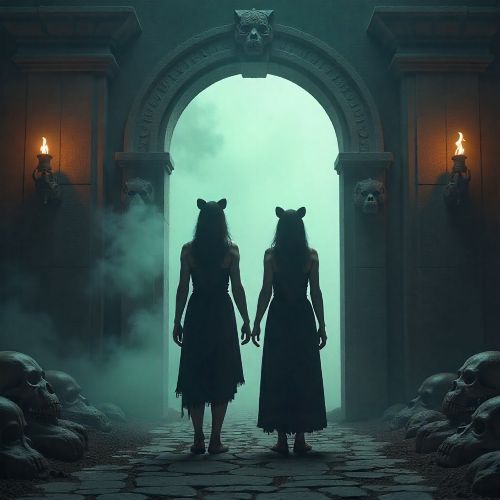
Baltog : The First Hero
Listen
At a glance
| Description | |
|---|---|
| Origin | Philippine Mythology |
| Classification | Mortals |
| Family Members | N/A |
| Region | Philippines |
| Associated With | Bravery, Leadership |
Baltog
Introduction
Baltog stands as a towering figure in Philippine mythology, especially within the Ibalong epic of the Bicol region. He is regarded as the first hero to arrive in Ibalong, an ancient land believed to be the pre-colonial version of present-day Bicol. His arrival marks the beginning of organized settlement and agriculture, signifying a critical shift from untamed wilderness to structured human society. The tale of Baltog is deeply rooted in oral tradition and later recorded during colonial times, presenting him not just as a warrior but as a culture-bringer whose legacy continues to shape Bicolano identity today. His heroism, encapsulated in the slaying of the monstrous wild boar Tandayag, symbolizes man’s ability to tame and civilize nature through courage and ingenuity.
Physical Traits
Baltog is depicted as a striking and imposing figure whose physical attributes reflect both nobility and raw power. His origins from Boltavara—believed by some to be ancient India—add a mythical aura to his character, suggesting an otherworldly background. Descriptions of Baltog include tall stature, powerful arms, and fair skin, aligning him with the “tawong lipod,” a race of wind people known for speed and might. His legendary strength is demonstrated in his battle with Tandayag, where he is said to have broken the beast’s jawbones with nothing but his bare hands. This feat emphasizes not only physical endurance but also the almost divine energy he possessed, painting him as a larger-than-life hero meant to inspire awe and reverence.
Family
While the Ibalong epic does not provide exhaustive genealogical details, Baltog’s family roots are key to understanding his symbolic role in the narrative. He is often associated with the Lipod people, who were said to have migrated from a distant land and are considered to be of noble or divine descent. Though some stories link him to other epic figures such as Handiong and Bantong, these relationships are more thematic than biological, uniting them under the shared mission of taming Ibalong and building a peaceful, organized society. Baltog’s legacy, therefore, lies not in his personal lineage but in his foundational role as the father figure of Bicolano civilization.
Other names
In most known versions of the epic, Baltog is consistently referred to by his primary name, preserving his identity and anchoring him in the cultural memory of the Bicol region. The steadfast use of the name “Baltog” helps maintain the integrity of oral tradition, distinguishing him from other legendary figures whose identities may be more fluid. While minor variations in pronunciation or spelling—such as “Batlog”—have occasionally surfaced due to dialectical differences, they do not detract from the hero’s central role in the Ibalong narrative. He is also known in some texts as the “First Hero of Ibalong,” a title that reinforces his pioneering influence in both myth and regional history.
Powers and Abilities
Baltog’s reputation is built not on magical abilities but on exceptional human traits magnified to legendary proportions. His most iconic act—slaying the giant boar Tandayag—showcases his immense physical strength and unmatched bravery. But his heroism goes beyond brute force. Baltog is also credited with introducing taro cultivation in the fertile lands of Ibalong. This act of agricultural innovation underscores his role as a bringer of order, transforming wilderness into farmland and setting the stage for future settlements. His wisdom, courage, and leadership embody the virtues expected of early heroes—individuals who not only fight monsters but also lay the groundwork for society. His skill in rallying people to confront threats speaks to his strategic mind, making him not just a fighter but a nation-builder.
Modern Day Influence
Today, Baltog remains a cultural icon in the Philippines, especially in the Bicol region where his story is kept alive through the vibrant Ibalong Festival. Held annually in Legazpi City, this event celebrates the three main heroes of the Ibalong epic—Baltog, Handiong, and Bantong—through parades, dances, and dramatic reenactments. Baltog often takes center stage as the symbol of courage and innovation. His influence extends beyond festivities into education, literature, and visual art. School textbooks introduce him as one of the earliest figures in Philippine mythology, helping instill pride and historical awareness in young Filipinos.
Artists and writers continue to draw inspiration from Baltog, adapting his narrative into comics, plays, and modern digital formats. In 2019, augmented reality exhibits featured Baltog alongside other mythological icons, bridging the gap between traditional folklore and contemporary technology. These adaptations ensure that his story is not merely archived but actively engaged with, reflecting evolving interpretations that resonate with current social values.
Baltog’s relevance today also aligns with movements centered on environmental stewardship and indigenous wisdom. His cultivation of taro, a sustainable crop, mirrors modern conversations about food security and agricultural practices. Moreover, his struggle against a destructive beast can be seen as an allegory for protecting land and life from existential threats, a theme that continues to echo in contemporary issues like climate change and ecological preservation.
Related Images


 What Were Odin’s Riddles, and Why Were They Deadly?
 Akan Caribbean Mythology: African Beliefs That Crossed the Atlantic
 Why the Solar Solstice marked the most powerful days of the ancient world
 Solar Equinox in Ancient Belief: Light, Darkness and Divine Harmony
 Saptamatrika : The Seven Mother Goddesses Who Shape Cosmic Power




Source
Bicolano Myths : Batlog. (2014, November 21). Bicolano Myths. Retrieved from https://bicolanomythsofgodsandmonsters.blogspot.com/2014/11/batlog.html
Baltog: Pioneer in the epic Ibalon of the Bikolano. (n.d.). Philippine Cultural Education Program. Retrieved from https://philippineculturaleducation.com.ph/baltog-pioneer-in-the-epic-ibalon-of-the-bikolano/
Some Epic Laws of the Donggon: A Study in Structure. (1972). JSTOR. Retrieved from https://www.jstor.org/stable/42634840
Baltog supernatural characteristics – Brainly.ph. (2023, May 10). Brainly. Retrieved from https://brainly.ph/question/30869697
Baltog mythology books. (n.d.). Aswang Project. Retrieved from https://www.aswangproject.com/mythical-heroes-of-philippines/
HANDYONG & ORYOLA: Bicol Folk Tale of Love and Redemption. (2019, July 11). Retrieved from https://joniree.wordpress.com/2019/07/11/handyong-oryola-bicol-folk-tale-of-love-and-redemption/
Baltog lineage Philippine mythology. (n.d.). Bicolano Myths. Retrieved from https://bicolanomythsofgodsandmonsters.blogspot.com/2016/02/bikolandia-tales-and-legends-in-land-of.html
Bicol gods, monsters and heroes. (n.d.). Blogger. Retrieved from https://oldtalesphilippines.blogspot.com/2016/08/bicol-gods-monsters-and-heroes.html
The Three Heroes of Ibalon. (n.d.). Scribd. Retrieved from https://www.scribd.com/document/235664102/The-Three-Heroes-of-Ibalon
Frequently Asked Questions
What is lorem Ipsum?
I am text block. Click edit button to change this text. Lorem ipsum dolor sit amet, consectetur adipiscing elit. Ut elit tellus, luctus nec ullamcorper mattis, pulvinar dapibus leo.
What is lorem Ipsum?
I am text block. Click edit button to change this text. Lorem ipsum dolor sit amet, consectetur adipiscing elit. Ut elit tellus, luctus nec ullamcorper mattis, pulvinar dapibus leo.
What is lorem Ipsum?
I am text block. Click edit button to change this text. Lorem ipsum dolor sit amet, consectetur adipiscing elit. Ut elit tellus, luctus nec ullamcorper mattis, pulvinar dapibus leo.
What is lorem Ipsum?
I am text block. Click edit button to change this text. Lorem ipsum dolor sit amet, consectetur adipiscing elit. Ut elit tellus, luctus nec ullamcorper mattis, pulvinar dapibus leo.
What is lorem Ipsum?
I am text block. Click edit button to change this text. Lorem ipsum dolor sit amet, consectetur adipiscing elit. Ut elit tellus, luctus nec ullamcorper mattis, pulvinar dapibus leo.