Enkai-na-Nyokie : Maasai God of Thunder and Divine Fury
Listen
At a glance
| Description | |
|---|---|
| Origin | Masaai Mythology |
| Classification | Gods |
| Family Members | N/A |
| Region | Tanzania |
| Associated With | Fire, Destruction, Rain, Thunder |
Enkai-na-Nyokie
Introduction
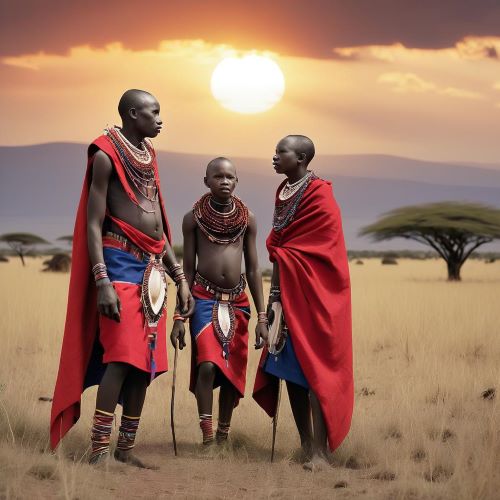
Enkai-na-Nyokie, often translated as “The Red God,” is a powerful and feared manifestation of Enkai, the supreme deity worshipped by the Maasai of Kenya and Tanzania. Maasai cosmology views Enkai as a singular divine being with dual aspects, each represented by colors reflecting nature’s contrasting forces. Enkai-na-Nyokie symbolizes anger, drought, and hardship, while the benevolent Enkai-Narok — the “Black God” — represents rain, nourishment, and peace. This duality is essential to the Maasai worldview, where survival depends on maintaining harmony with the natural world and the divine forces that shape it.
The Maasai are traditionally semi-nomadic pastoralists, and their livelihood revolves around cattle as both economic and spiritual wealth. The behavior of the sky — thunderstorms, rainfall, dry seasons — is believed to express Enkai’s will. When conditions turn harsh, people interpret it as Enkai-na-Nyokie’s dominance. His myth expresses that blessings and struggle are inseparable in the rhythm of life.
Physical Traits
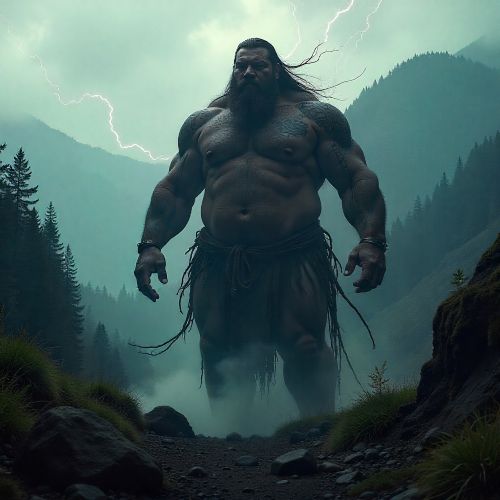
Traditional Maasai storytelling does not emphasize detailed physical forms for their deity. Instead of human-like imagery, Enkai is recognized through the ever-changing sky. Enkai-na-Nyokie is symbolically linked to the color red, which reflects both the harsh heat of the dry season and the life-essence represented by blood. His presence is also tied to the blazing sun and the red-tinted skies that appear during times of drought, signaling challenging conditions for both people and cattle. Storms heavy with lightning and thunder are interpreted as further expressions of his forceful energy and divine influence.
Rather than being imagined as a being with a defined shape, Enkai-na-Nyokie is perceived as the very atmosphere in motion — a force of nature capable of both destruction and renewal. His connection to fire, dryness, and fierce weather represents the difficult phases that ultimately restore balance and strengthen the community’s relationship with the land. Through these natural manifestations, the Maasai understand his role as a powerful but necessary presence in the cycle of life.
Family
Maasai belief does not describe Enkai-na-Nyokie as a separate god with his own genealogy. Instead, he is one expression of Enkai, who embodies every divine quality. Some modern interpretations describe the Red and Black aspects as “brothers,” but scholarly accounts emphasize they are two sides of one eternal being — like shifting moods of the same sky.
Enkai’s relationship with humanity is more central to Maasai spirituality than relationships with other gods. Through cattle — believed to be a direct gift from Enkai — the deity remains deeply connected to the Maasai people. When cattle thrive, Enkai-Narok is present. When they suffer, Enkai-na-Nyokie’s displeasure is felt.
Other names
The Maasai primarily refer to their deity as Enkai (or Engai / Ngai), with Enkai-na-Nyokie specifically naming the harsh red manifestation of divine power. This terminology remains fairly consistent across Maasai communities, and does not widely appear with distinct alternative names in authoritative sources.
The simplicity of the naming reflects the oral nature of the tradition — flexibility in expression but consistency in recognizing the dual-aspect structure.
Powers and Abilities
Enkai-na-Nyokie’s influence is understood through natural disruptions that challenge the survival of both the Maasai and their cattle. When rain is withheld and the land dries up, the resulting scarcity of pasture and water signals his dominance during seasons of hardship. Storms filled with fierce lightning and thunder are also interpreted as signs of his power, reminding the community that the forces of nature can shift from life-giving to destructive without warning. These moments of struggle are seen as divine tests, urging the Maasai to remain resilient and attentive to the balance between people, cattle, and land.
His presence teaches humility and reinforces the belief that survival depends on honoring natural cycles. Every period of difficulty becomes a spiritual reminder to restore harmony with Enkai. In times of drought, the Maasai turn to prayers, ritual sacrifices, and the blessings of elders to seek reconciliation with the divine, asking for the return of Enkai-Narok, the Black God, who brings nourishing rains. Through these practices, hardship is understood not as punishment but as a temporary phase that ultimately strengthens faith, unity, and cultural endurance.
Modern Day Influence
Despite the growing influence of global religions, Maasai spiritual tradition remains firmly rooted in the worship of Enkai, and the Red God continues to hold deep cultural significance. His presence is especially acknowledged during times of environmental hardship, when drought or extreme weather disrupts daily life and threaten the well-being of cattle, which are central to Maasai livelihood. Elders often share stories that explain the divine purpose behind such challenges, helping younger generations understand how struggle strengthens the bond between the people, the land, and the deity who governs both. Sacred sites like Ol Doinyo Lengai—the revered Mountain of God—remain important locations for prayer and ritual, reinforcing the spiritual link to the sky and the natural world. The Maasai also view environmental conservation as a way of maintaining harmony with divine forces, ensuring that the balance established by Enkai is respected and preserved.
As climate change and land pressures increase the frequency and severity of drought, the symbolism of Enkai-na-Nyokie has gained renewed relevance. His legend serves as a reminder that resilience, adaptability, and community unity are essential for survival. Although this aspect of Enkai is feared, he is not considered malevolent. Rather, he embodies the belief that life’s blessings require responsibility, encouraging the Maasai to honor their traditions, protect the landscape that sustains them, and respect the delicate spiritual order that governs existence.
Related Images

 What Were Odin’s Riddles, and Why Were They Deadly?
 Akan Caribbean Mythology: African Beliefs That Crossed the Atlantic
 Why the Solar Solstice marked the most powerful days of the ancient world
 Solar Equinox in Ancient Belief: Light, Darkness and Divine Harmony
 Saptamatrika : The Seven Mother Goddesses Who Shape Cosmic Power



Sources
BlueGecko. (n.d.). Maasai beliefs and religion. BlueGecko. Retrieved November 26, 2025, from https://www.bluegecko.org/kenya/tribes/maasai/beliefs.htm
Encyclopedia of African Religion. (n.d.). Maasai. SAGE Publications. Retrieved November 26, 2025, from https://sk.sagepub.com/ency/edvol/africanreligion/chpt/maasai
Google Arts & Culture. (n.d.). Engai: God of the Maasai (Project FUEL). Retrieved November 26, 2025, from https://artsandculture.google.com/story/engai-god-of-the-maasai-project-fuel/JQWhJMlxe9QNKQ
Kenya Luxury Safaris. (n.d.). The Maasai Tribe: Culture, religion & lifestyle. Retrieved November 26, 2025, from https://kenyaluxurysafaris.co.uk/masai-mara/maasai-tribe-facts/
Kunta Content. (n.d.). Maasai belief systems. Retrieved November 26, 2025, from https://www.kuntacontent.com/maasai-belief-systems
Nielsen, J. C. (2020). Fertility Myth of Oldoinyo Lengai and Its Impacts To the Maasai Community of Northern Tanzania [Research Paper]. ResearchGate. https://www.researchgate.net/publication/341443952_Fertility_Myth_of_Oldoinyo_Lengai_and_Its_Impacts_To_the_Maasai_Community_of_Northern_Tanzania
Wikipedia contributors. (2025, November 24). Maasai religion. In Wikipedia, The Free Encyclopedia. Retrieved November 26, 2025, from https://en.wikipedia.org/wiki/Maasai_religion
Frequently Asked Questions
Who is Enkai-na-Nyokie?
He is the Red God in Maasai mythology, associated with storms, lightning, and divine judgment.
What role does he play in Maasai culture today?
His myths still influence ceremonies, beliefs, and interpretations of natural events.
Why is he called the Red God?
The color red symbolizes power, danger, and the fiery intensity of storms and lightning.
Is Enkai-na-Nyokie a villain?
No — he represents necessary destruction that helps maintain balance in nature.
Does he have a counterpart?
Yes — Enkai-na-Nyokie is the fierce aspect of Enkai, whose benevolent form is Enkai-na-Narok (the Black God).