Di Jun : The Chinese Solar God and Celestial Emperor
Listen
At a glance
| Description | |
|---|---|
| Origin | Chinese Mythology |
| Classification | Gods |
| Family Members | Xihe (Wife) |
| Region | China |
| Associated With | Sun |
Di Jun
Introduction
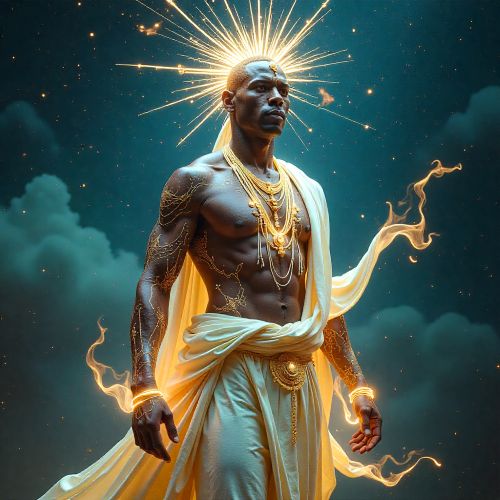
Di Jun, also known as Emperor Jun, holds significant stature in Chinese mythology, often associated with the eastern heavens and the sun. Revered for wisdom and benevolence, his tales are deeply ingrained in folklore. Portrayed as a majestic ruler, Di Jun embodies power, wisdom, and divine governance. Shrouded in the mists of time, he emerges from ancient Chinese mythology. Though his origins remain unclear, he holds a prominent place as a deity linked with the celestial realm, the sun, and cultural lineage. His name, comprising “emperor” and “handsome”, hints at regal authority and captivating appearance. While artistic depictions often feature him in regal attire adorned with sun symbols, concrete physical descriptions are scarce, adding to his enigmatic aura.
Physical Traits
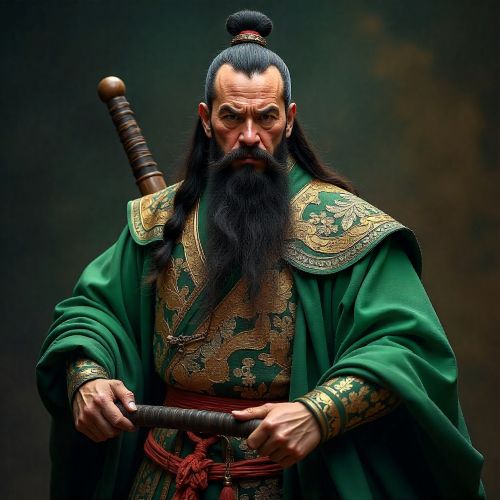
In traditional portrayals, Di Jun exudes regality and authority, often clad in imperial robes that symbolize his divine emperor status. His eyes, likened to the sun, affirm his celestial association. Within his complex family structure, two consorts stand out: Xihe, the sun goddess, and Changxi, the moon goddess, both pivotal in celestial order. Xihe bore him ten suns, while Changxi birthed twelve moons, each responsible for maintaining the natural balance of day and night. Di Jun’s lineage extends to cultural innovators like Houji, credited with introducing agriculture to China, solidifying his central role in shaping human civilization.
Family
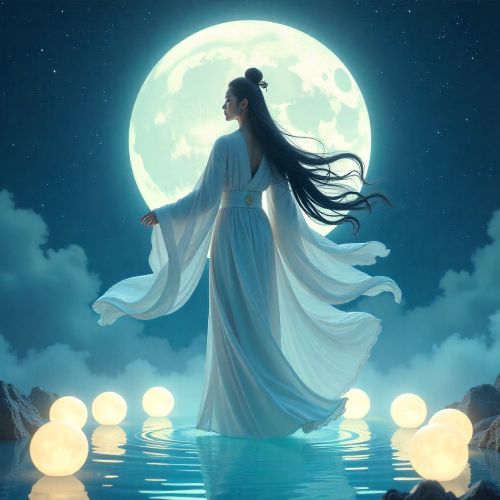
Di Jun, a prominent figure in Chinese mythology, is part of a divine lineage. He fathered ten suns, often depicted as three-legged crows dwelling in a mulberry tree in the East Sea. Within his complex family structure, his consorts Xihe, the sun goddess, and Changxi, the moon goddess, hold significant roles in celestial order. Xihe birthed ten suns, while Changxi bore twelve moons, entities responsible for maintaining the natural cycle of day and night. Di Jun’s lineage extends to cultural innovators like Houji, credited with introducing agriculture to China, highlighting his central role in shaping human civilization.
Other names
Di Jun, also known as Emperor Jun, God Jun, and Taihao, embodies various aspects within the mythological pantheon. As a celestial emperor, he commands significant power, ruling over the heavens and influencing the movements of the sun and moon. Accounts depict him as directly controlling these celestial bodies. Tasked with managing his ten sons, he ensures they maintain balance in the sky, taking turns traversing it. Furthermore, Di Jun is linked to agriculture’s development, suggesting broader influence on mortal prosperity.
Powers and Abilities
As a sun deity, Di Jun holds immense power, controlling daylight and influencing the seasons. His wisdom and leadership shine through in his governance, characterized by fairness and justice. Di Jun, as a celestial emperor, wields considerable authority over the heavens, guiding the movements of the sun and moon. Some accounts even depict him directly controlling these celestial bodies. Tasked with managing his ten sons, he ensures they maintain the delicate balance of daylight in the sky. Additionally, Di Jun’s association with agriculture highlights his broader influence on mortal prosperity and livelihood.
Modern Day Influence
Di Jun’s influence transcends ancient times, resonating in modern Chinese culture. Often invoked in rituals for prosperity and good fortune, his story remains vibrant in literature and popular culture, solidifying his prominence in mythology. Across various media, from literature to art and video games, Di Jun’s name and image endure, reminding us of his celestial legacy. The enduring symbol of the ten suns reinforces his profound impact on the cosmic order, while his association with agriculture continues to symbolize China’s deep reverence for the land.
In the modern era, interpretations of Di Jun have evolved. While traditional narratives emphasize his power, contemporary portrayals highlight his responsibility and leadership. Sometimes depicted as a cautionary figure, Di Jun underscores the consequences of unchecked authority, stressing the importance of maintaining cosmic harmony. This shift reflects the ongoing dialogue between tradition and modernity, enriching Di Jun’s myth with new layers of meaning in today’s cultural landscape.
Related Images


 What Were Odin’s Riddles, and Why Were They Deadly?
 Akan Caribbean Mythology: African Beliefs That Crossed the Atlantic
 Why the Solar Solstice marked the most powerful days of the ancient world
 Solar Equinox in Ancient Belief: Light, Darkness and Divine Harmony
 Saptamatrika : The Seven Mother Goddesses Who Shape Cosmic Power



Sources
Hamilton, M. (2022, December 1). Di Jun. Mythopedia. Retrieved from https://mythopedia.com/topics/di-jun/
Wikipedia contributors. (n.d.). Di Jun. Wikipedia. Retrieved from https://en.wikipedia.org/wiki/Di_Jun
Theobald, U. (2012, January 23). Di Jun (帝俊). ChinaKnowledge.de. Retrieved from https://www.chinaknowledge.de/History/Myth/personsdijun.html
Yang, L., An, D., & Turner, J. A. (2005). Handbook of Chinese Mythology. Oxford University Press.
Birrell, A. (1993). Chinese Mythology: An Introduction. Johns Hopkins University Press.
Birrell, A. (2011). Chinese Myths and Legends. Routledge.
Cheng, X. (2024). 帝俊考——基于早期文献与图像的思考 [The Study of Di Jun Based on Early Texts and Images]. Journal of the Malaysian Linguistic and Literary Society, 40(2), 45-68.
Frequently Asked Questions
Who is Di Jun in Chinese mythology?
Di Jun is a supreme celestial emperor and solar deity in ancient Chinese mythology, often regarded as a ruler of Heaven and a patron of kingship.
What is Di Jun known for?
He is best known as the father of legendary figures such as Hou Yi, the divine archer who shot down the scorching suns. His stories emphasize cosmic order and royal authority.
What does Di Jun represent?
Di Jun symbolizes the sun, cosmic balance, governance, and prosperity, playing a crucial role in maintaining harmony between Heaven, Earth, and humanity.
Does Di Jun appear in classical texts?
Yes. Di Jun appears prominently in ancient sources like the Shan Hai Jing (Classic of Mountains and Seas), where he is depicted as a key divine ruler overseeing sun and sky.
How does Di Jun influence Chinese culture today?
His legacy continues through references in astronomy, literature, and popular culture, especially wherever themes of solar power, divine authority, and heroic lineage appear in storytelling.