Thoth : The God Of Medicine
Listen
At a glance
| Description | |
|---|---|
| Origin | Egyptian Mythology |
| Classification | Gods |
| Family Members | Ra (Father), Seth (Father) |
| Region | Egypt |
| Associated With | Writing, Moon, Wisdom |
Thoth
Introduction
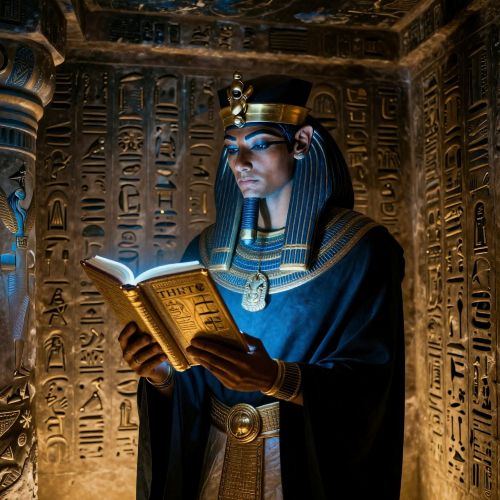
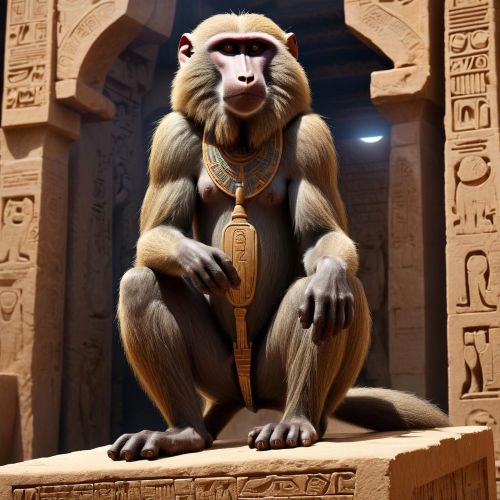
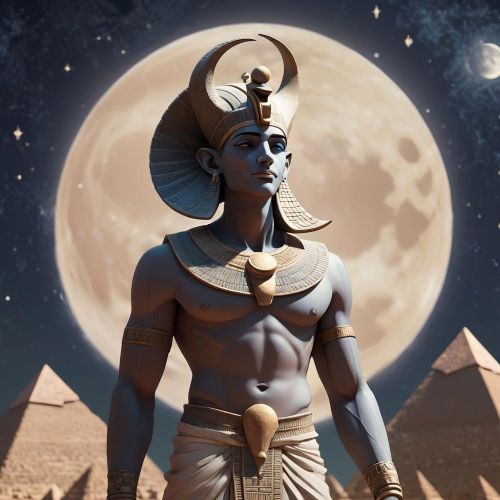
Thoth, also known as Djehuty or Tehuti, was one of the most significant deities in Egyptian mythology, revered as the god of the moon, wisdom, writing, and knowledge. His cult was centered in Khmunu (Hermopolis Magna) in Upper Egypt, which became a hub for learning and intellectual pursuits. Thoth was commonly depicted as a man with the head of an ibis, a bird associated with wisdom and the moon. In later periods, he was also represented as a baboon, another sacred animal linked to him. The Greeks equated him with Hermes Trismegistus, the “thrice great,” due to his mastery of science, philosophy, and magic. Beyond being a divine scribe, Thoth played a crucial role in maintaining Ma’at (cosmic balance) and acted as a mediator among the gods.
Physical Traits
Thoth’s iconography is rich and varied, reflecting his many attributes. His most common form was that of a man with the head of an ibis, often wearing a lunar crown symbolizing his connection to the moon. Sometimes, he appeared as a baboon, especially in depictions relating to judgment and the afterlife. His attributes included the ankh, symbolizing life, and writing tools such as a palette and reed pen, highlighting his role as the inventor of writing. In some portrayals, he carried a staff or wore crowns associated with other gods, emphasizing his versatility. His ibis form was linked to wisdom, while the baboon form represented vigilance and justice during divine judgment.
Family
The origins of Thoth vary depending on the tradition. In one myth, he was born from the lips of Ra, embodying divine speech and truth. Another tradition describes him as the ibis who laid the cosmic egg at the dawn of creation, establishing him as a primordial figure. In the myth of Horus and Seth, Thoth was often seen as a peacemaker, healing both gods during their conflict to ensure fairness in their contest for kingship. His role as a mediator highlighted his impartiality and his alignment with justice. While he was not strongly tied to a divine consort like other gods, he was often connected symbolically to Ma’at, the goddess of truth and order, since together they upheld cosmic balance.
Other names
Thoth was widely known by many titles that emphasized his attributes. His Egyptian name, Djehuty, is thought to mean “He Who is Like the Ibis.” The Greeks gave him the title Hermes Trismegistus, meaning “Hermes the Thrice-Great,” reflecting his mastery of philosophy, alchemy, and sacred knowledge. He was also called “Lord of the Ogdoad”, in reference to his association with Hermopolis, where the eight primordial deities were worshipped. Other epithets included “Without a Mother”, linking to his mysterious origins, and “Ra’s Place-Taker”, symbolizing his role as a substitute and mediator for the sun god.
Powers and Abilities
Thoth was revered as the scribe of the gods and the inventor of writing, mathematics, astronomy, and medicine. His wisdom made him indispensable in both divine and human affairs. He was responsible for recording the results of the weighing of the heart ceremony in the Hall of Ma’at, where the deceased’s soul was judged. Thoth was also associated with the moon, controlling time, calendars, and the seasons. His magical knowledge allowed him to resolve conflicts among gods and to restore harmony when order was threatened. As the keeper of cosmic balance, he was both a diplomat and a judge, ensuring justice while wielding great mystical power.
Modern Day Influence
The legacy of Thoth has endured far beyond ancient Egypt. In Greek culture, he evolved into Hermes Trismegistus, a figure central to the Hermetic tradition, which influenced philosophy, alchemy, and early science. Thoth was also cited in Plato’s dialogues, where he is credited with the invention of writing and intellectual arts. The Coptic calendar named its first month, Thout, after him. In modern times, he continues to appear in literature, tarot, and pop culture. Aleister Crowley’s “The Book of Thoth” drew heavily from his symbolism in relation to tarot mysticism. Thoth also features in Neil Gaiman’s American Gods, where he is reimagined as Mr. Ibis, a funeral director who records stories of the dead, staying true to his mythological roots. His enduring presence reflects humanity’s fascination with wisdom, truth, and the mysteries of the cosmos.
Related Images


 What Were Odin’s Riddles, and Why Were They Deadly?
 Akan Caribbean Mythology: African Beliefs That Crossed the Atlantic
 Why the Solar Solstice marked the most powerful days of the ancient world
 Solar Equinox in Ancient Belief: Light, Darkness and Divine Harmony
 Saptamatrika : The Seven Mother Goddesses Who Shape Cosmic Power




Source
Allen, J. P. (2005). The Ancient Egyptian Pyramid Texts. Society of Biblical Literature.
Hart, G. (2005). The Routledge Dictionary of Egyptian Gods and Goddesses (2nd ed.). Routledge.
Hornung, E. (1999). The Ancient Egyptian Books of the Afterlife. Cornell University Press.
Pinch, G. (2002). Handbook of Egyptian Mythology. ABC-CLIO.
Encyclopaedia Britannica. (n.d.). Thoth, in Egyptian religion. In Britannica. Retrieved September 10, 2025, from https://www.britannica.com/topic/Thoth Encyclopedia Britannica
Egyptian Museum (Rosicrucian Egyptian Museum). (n.d.). Thoth – Explore Deities of Ancient Egypt. Retrieved from https://egyptianmuseum.org/deities-thoth
Watterson, B. (1999). The Gods of Ancient Egypt. The History Press.
Wilkinson, R. H. (2003). The Complete Gods and Goddesses of Ancient Egypt. Thames & Hudson.
Frequently Asked Questions
What is Thoth the god of?
Thoth is the Egyptian god of wisdom, writing, magic, and the moon. He was considered the scribe of the gods, the inventor of writing, and the keeper of divine knowledge. Thoth also played a key role in maintaining balance and order (ma’at) and acted as a mediator among the gods.
Is Thoth good or evil?
Thoth is not considered evil. In Egyptian mythology, he is viewed as a benevolent and wise deity who upholds balance, truth, and justice. He often acts as a mediator in conflicts between gods and helps guide souls in the afterlife. His role is protective and constructive rather than destructive.
Is Thoth a female?
No, Thoth is not female. In Egyptian mythology, Thoth is a male deity, usually depicted as a man with the head of an ibis or sometimes as a baboon. However, he is closely associated with Ma’at, the goddess of truth and cosmic order, and sometimes embodies qualities traditionally linked to both masculine and feminine aspects, such as wisdom, balance, and nurturing order.
What powers does Thoth have?
Thoth is the god of wisdom, writing, and knowledge. He is credited with inventing hieroglyphic writing, mathematics, and astronomy. He also had the power to maintain balance in the universe and served as a divine mediator between gods.
Why is Thoth important in Egyptian mythology?
Thoth played a vital role in Egyptian religion as the scribe of the gods and the keeper of divine knowledge. He recorded the outcome of the weighing of the heart ceremony in the afterlife, ensuring justice and truth prevailed. His influence shaped Egyptian law, science, and spirituality.
Watch
Click edit button to change this html